

Superstitions still sneak into our daily lives. Do you knock on wood to ward off a jinx, or wince at the thought of seven years of bad luck after breaking a mirror?
Then there’s the classic New Year’s Eve ritual: open the back door just before midnight to let the old year out, then throw open the front door to welcome the new one. Ideally, it arrives with a tall, dark-haired man carrying coal and whisky (especially whisky in Scotland) to bring luck for the months ahead.
Today we treat them as quirky habits or harmless fun. But without the internet and AI to explain life’s mysteries, our ancestors relied on omens, passed along by word of mouth and in almanacs. Nowhere were they more watchful than at life’s biggest thresholds: birth and marriage.
The Perils and Portents of Birth
Being born in earlier centuries was a risky business, so it’s no surprise that a cottage industry of folklore and superstition grew up around it. You probably know this one:
Monday’s child is fair of face,
Tuesday’s child is full of grace,
Wednesday’s child is full of woe,
Thursday’s child has far to go,
Friday’s child is loving and giving,
Saturday’s child works hard for a living,
And the child who is born on the Sabbath Day
Is bonny and blithe, and good and gay.
The exact timing and circumstances of a birth were closely scrutinized:
- The tide: Babies were said to arrive on the incoming tide, as life was thought to ebb away with the outgoing one. Apparently, children were polite enough to wait for the water!
- The “chime hours”: A baby born at the chime hours, or during a Christmas morning sermon, was believed to have the gift of seeing spirits. Did this make for interesting family gatherings?
- Birth order: “First a daughter, then a son, the world is well begun. First a son, then a daughter, trouble follows after.” Apologies to firstborn sons everywhere.
Once the baby arrived, simply getting around became a minefield. A newborn must never be carried across a crossroads, which was considered a grave danger to its life. In some Celtic traditions, a baby’s first movement must never be downward, such as being carried down the stairs, lest it invite bad luck. You had to go up before you could go down, even if it meant stepping onto a chair first.
Clumsiness as a Sign of Matrimony
Long before Hinge, Bumble and Match, everyday accidents were the first best way toward a speedy marriage.
Break a needle into three pieces while sewing, or trip while going up the stairs, and congratulations: a wedding was imminent. Stumble down the stairs, however, and you got bad luck and a bruised ego.
Dreams were interpreted with zero subtlety. Beds, cradles, ploughing, trees in blossom, losing a bonnet, or priests dressed in white were all rock-solid signs of a happy union.
Wedding Day Paranoia and Fairy Evasion
When the big day finally arrived, good luck required careful planning and strict adherence to the rules.
- Choosing the day: Tuesday was the golden ticket, while Thursday and the season of Lent were to be avoided. “Marry in Lent, live to repent.”
- The bridal checklist: “Something old, something new, something borrowed, something blue,” often with a sixpence in your shoe to bribe the universe for prosperity.
- The dress rehearsal: Brides were warned never to try on the complete outfit before the wedding day, in case they tempted fate.
- Colour: White was fine, but green belonged to the fairies, and wearing it was a great way to get yourself abducted by the wee folk.
- The veil: Its original purpose wasn’t fashion. It was a disguise to hide the bride from evil spirits and jealous fairies who might want to steal her away.
- Handfasting: The ancient Celtic custom of binding the couple’s hands together with a cord is a literal case of tying the knot, and was believed to ward off evil.
- The honeymoon: Legend has it that couples drank mead for a month after the wedding to boost fertility, supposedly giving us the word “honeymoon.”
- The threshold: The groom had to carry the bride into their new home, because if she tripped on the way in, it would invite evil spirits inside. No pressure.
- Lucky sightings: For peak luck, the bride should spot a black cat, a rainbow, or be ambushed by a chimney sweep for a kiss.
- Dire omens: Losing a garter, dropping the ring during the ceremony, or turning back on the way to the church all spelled a broken marriage or immediate doom.
It makes you wonder how anyone made it down the aisle, or out of the nursery, at all. The next time you’re stressed about planning a modern event, be glad you don’t have to dodge vengeful fairies or schedule your life around the tide.
Sources for superstitions of all kinds from around the world include Biren Bonnerjea’s 1927 A Dictionary of Superstitions and Mythology, available on the Internet Archive, and Iona Opie and Moira Tatem’s definitive 1989 A Dictionary of Superstitions. AI was used to help compile this post.
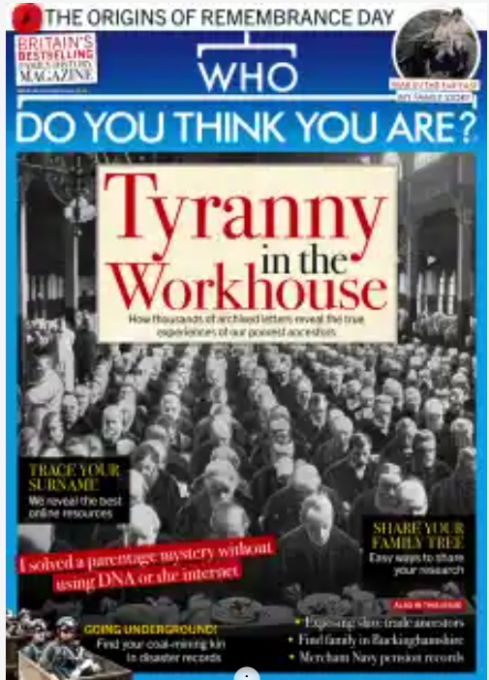 The magazine has reached 250 issues, and Sarah Williams has been editor from the start. Congratulations Sarah.
 The Society of Genealogists is offerring a series of talks, workshops, discussions and visits (for thise who can get there) that explores death, burial and remembrance from many different angles.
 New to MyHeritage, 1,301,873 Great War POW records indexed from files originally compiled by the International Committee of the Red Cross. The RC traced captured and missing servicemen on behalf of their families throughout the war. Alongside the main British Army and Commonwealth file, the collection includes a separate file for servicemen reported missing at Gallipoli and the Dardanelles.
 Military Medals Awarded to Foreigners by the British Government, 1914-1920
 Join in person at Ottawa’s Knox Presbyterian Church (Lisgar & Elgin) or online by registering