
The Eclipse

Do you recall experiencing a solar eclipse? Did your ancestors?

As a kid I marvelled at the partial solar eclipse on Wednesday, 30 June 1954 seen from my school playground during lunch hour. 

On Friday, 20 March 2015, I was in Algarve, Portugal, at Peter Calver’s Genealogy in the Sunshine event. A bonus on top of some wonderful presentations came as a partial solar eclipse.

While partial eclipses of the sun can be memorable, total eclipses are rare at any given spot. A total solar eclipse would be a once-in-a-lifetime event that diarist-ancestors would be likely to record.

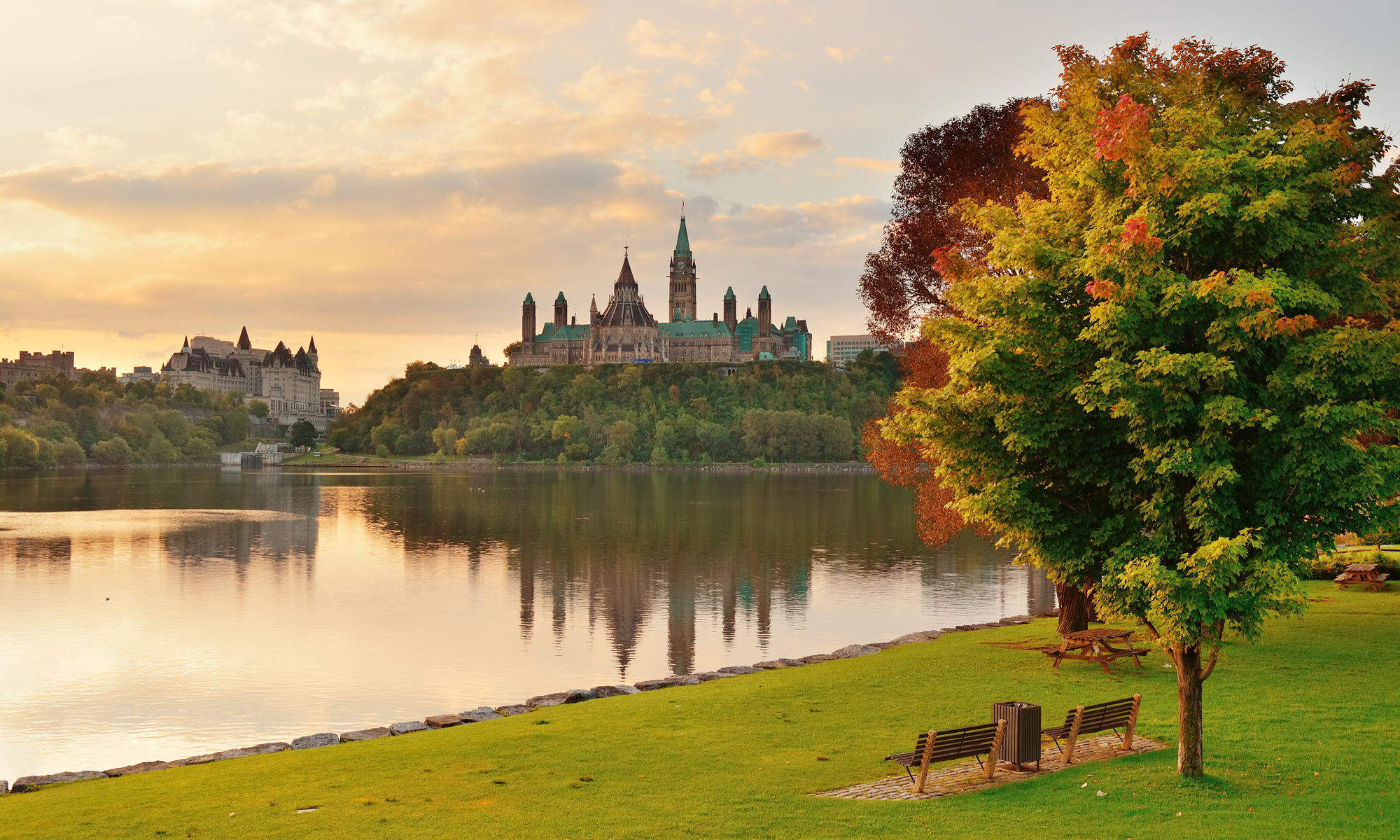
Astronomers’ calculations have the last total eclipse of the sun in Ottawa on 10 September 1569, too early even for Samuel de Champlain! No diary entries!  In Monteal the last one was on Wednesday 31 August 1932, in Toronto Saturday 24 January 1925. Those are from http://andrew lowe.ca/canadian_cities.htm

I’m not counting on seeing the next one in Ottawa in 2205. Will you be joining those expected to flock to the shores of the St Lawrence on Monday 8 April to edge into the zone of totality? Watch the weather forecast and hope for a reasonably cloud-free day. The last ones in Toronto and Montreal were a dissappointment owing to cloud cover.

This Week’s Online Genealogy Events

Choose from selected free online events in the next five days. All times are ET except as noted. Assume registration in advance is required; check so you’re not disappointed. Find out about many more mainly US events at Conference Keeper at https://conferencekeeper.org

Tuesday 12 March 

2 pm: Getting the Scoop on Your Ancestors from Old Newspapers, by Moshe Etlis for MyHeritage and Legacy Family Tree Webinars.
https://familytreewebinars.com/webinar/getting-the-scoop-on-your-ancestors-from-old-newspapers/

2:30 pm:  The Future Of Family History, by Nick Barrett for North of Ireland Family History Society, Lisburn Branch.
https://www.nifhs.org/event/the-future-of-family-history/

7 pm: The Winter of Discontent: 1838 and the Invasion of Pelee Island by Jean Baxter for OGS Essex Branch.
https://essex.ogs.on.ca/meetings/essex-county-branch-the-winter-of-discontent-1838-and-the-invasion-of-pelee-island-by-jean-baxter/

Wednesday 13 March

7 pm: Who Lived Here? by Richard Collins for the Historical Society of Ottawa.
https://www.historicalsocietyottawa.ca/activities/events/eventdetail/123/16,17,19,21/who-lived-here

7:30 pm:  Canadian Resources Review, by Sher Leetooze for Lakeshore Genealogical Society. 
https://www.lakeshoregenealogicalsociety.ca/

8 pm: U.S. Synagogue Records as a Genealogical Resource, by Ellen Kowitt for Legacy Family Tree Webinars.
https://familytreewebinars.com/webinar/u-s-synagogue-records-as-a-genealogical-resource/

Thursday 14 March

Friday 15 March

10 am: The Index of Suffragettes Arrested – Secrets of the National Archives (UK)
https://www.eventbrite.co.uk/e/secrets-of-the-national-archives-the-index-of-suffragettes-arrested-tickets-602461046207

7 pm: The Stand Against The Fenians In Fort Erie, by June Chipp for OGS Niagara Peninsula Branch.
https://niagara.ogs.on.ca/events/niagara-peninsula-branch-monthly-webinar-series-2024-2024-03-15/

Saturday 16 March

10 am: Beginner’s Irish Genealogy Research, by Ken McKinlay for OGS Kingston Branch
https://kingston.ogs.on.ca/events/kingston-branch-beginners-irish-genealogy-research

1 pm: Hidden Treasures: Canadian Military Records Seen and Unseen, by Glenn Wright for OGS Ottawa Branch.
https://ottawa.ogs.on.ca/events/monthly-presentation-ottawa-3/

1 pm: FamilySearch’s Ontario Land Records, by Ken McKinlay for OGS Qunite Branch.
https://quinte.ogs.on.ca/events/quinte-branch-familysearchs-ontario-land-records-with-ken-mckinlay/


Free Access to Ancestry Canadian Records

If you don’t have a subscription, until 16 March, you can explore all Ancestry Canadian collections for free. It’s your chance to check out Voters Lists 1935-1980; Newspapers.com™ Obituary Index, 1800s-current; Canadian Phone and Address Directories, 1995-2002; Quebec, Canada, Vital and Church Records (Drouin Collection), 1621-1968; Quebec, Canada, Notarial Records, 1637-1935; Ontario, Canada, Marriages, 1826-1940, and much more.

Find out and access at https://www.ancestry.ca/c/canada-free-access


Cassini Maps Collections on Ancestry

Ancestry has added two map sets from Cassini Historical Maps.

London, England, Parish Maps, 1860-1880
These 58 maps offer area information.  If you’re tracing an ancestor who was baptized at a specific location, such as All Hallows Staining in the City of London, the extract from the Ordnance Survey 1:1056 mapping, which shows the parish boundaries and significant features in the area ca. 1871, could be invaluable.

UK, Imperial Gazetteer Maps, 1900
A browsable image set of 28 nicely produced colour maps, most for Scotland with some significant locations in England. It may be there’s another shoe to drop.  Ancestry already has “The Imperial Gazetteer of England and Wales, 1872″ online. Perhaps there’s another volume for Scotland. The claim of 7,396 records suggests there’s more to come.

While the maps are useful, other than making them available, Ancestry has presently failed to add value. Producing a  linked table of contents or overview map that would take you directly to an area of interest would be a simple addition.

Sunday Sundries

Miscellaneous items I found of interest during the week.

The Material Culture of Wills, England 1540-1790
Find out about a project by the University of Exeter to use Transkribus handwriting recognition technology, along with a cadre of volunteers, to transcribe a selection of PCC wills.

What Winter?
This meteorological winter (DJF) Ottawa broke a record. The lowest recorded temperature was -18.7C on 21 January, more than 2 degrees warmer than the next warmest since records began in 1872. Accompanied by very limited skating on the Rideau Canal, snowfall much below average (so far) and the exceptionally early opening of the Quyon Ferry service, it has been an exceptional year so far.

Britain’s oldest synagogue in City of London could be plunged into darkness amid fresh skyscraper plans

Irish Emigrant Letters and Memoirs from North America

BIFHSGO Annual Conference
The dates, 26-27 October, are announced. Ireland is the theme.

Thanks to this week’s contributors: Ann Burns, Anonymous, Barbara May Di Mambro, Brenda Turner, gail benjafield, Patte Wood, Teresa, Unknown.

Cheers to History! Guinness Records Offer Family Tree Insights

“Toucans in their Nests Agree
Guinness is Good for You and Me”

I seem to remember that slogan from many years ago in England.

Toucans’ opinions aside, if you had an ancestor involved with Guinness, the company, you’ll probably agree these records, new to Ancestry, are good for family historians.

Ireland, Guinness Trade Ledgers, 1860-1960
This collection contains images of trade ledgers produced by the Guinness Brewery in Dublin, Ireland, and England between 1860 and 1960. The brewery’s sales and personnel records were kept in printed ledger books. Entries were often handwritten during the earlier years included in the collection, and as the years progressed, the ledger entries were typed.

Each of the 1,452,426 records may include:

Name
Employment date
Business Place

Ireland, Guinness Employee Records, 1799-1939

This 204,605 record collection contains images of employee records from the Guinness Brewery in Dublin, Ireland, between 1799 and 1939.

Records in this collection, with several different types of records, such as wage books, authorization logs, and next of kin records, may include the following information:

  • Name
  • Gender
  • Marital status
  • Birth date and place
  • Marriage date
  • Age at employment
  • Employment dates
  • Death date
  • Street address
  • Occupation
  • Location of employment
  • Spouse’s name, birth date, and age
  • Names, ages, and relationships of up to four relatives

Raise a glass (or just your curiosity!) in the run-up to St. Patrick’s Day and explore these records on Ancestry. What pint-sized piece of your own history might be waiting?

World War I Records Get an Upgrade: Explore LAC’s New Database

The old Personnel Records of the First World War database is widely acknowledged as a gem in LAC’s online collection. With it, we could search the archive of roughly 622,000 individual First World War service files by first and last names, regimental numbers, city or province of birth and/or enlistment, and box number.

After more than a decade, with the supporting technology nearing its end of life, LAC decided to integrate that collection into the larger Collection Search tool and simplify access through a specific interface for World War I personnel records.

With the new First World War Personnel Records database we can reduce the number of results using limiter options such as military rank, date range for year of birth, birth country or different enlistment geographic options.

I was interested to see how well the new interface would surface just those born in the UK.

At first glance, it suggests not. The dropdown against Birth province/state has no UK or other country option. Wait, there’s a dropdown option under Specific terms for Birth city and Birth country. England found 46,141 filtered results, Scotland 16,766, Ireland 6,363, and three for the United Kingdom. That total is much less than almost half of the CEF born in the UK.

While that search found none for Wales, searching Birth city found 236 for Cardiff!  The glass is half empty and half full; there’s a lot already available and an ongoing project to index extra details about the place of birth and enlistment. That’s a crowdsourcing opportunity that would be a better use of volunteer resource than the present Co-Lab challenges.

For a more detailed explanation, see the blog post https://thediscoverblog.com/2024/03/07/accessing-personnel-records-of-the-first-world-war-a-new-database-at-library-and-archives-canada/

If you’re concerned about saved links, old URLs will redirect users to the exact new location.

Unlocking Government Secrets: The Open By Default Database

Courtesy of the Investigative Journalism Foundation, a  repository of more than 20,000 documents is now freely available to promote government transparency.

Open By Default surfaces internal government records released under federal access legislation.

Here’s what I found searching between 2011 and 2024.

Keyword Hits
genealogy 48
genealogical 41
Ontario Genealogical Society 4
Census 879
Library and Archives 1,653
War Brides 4
Home Children 14

These are not all what you’d expect. Hits for Home Children includes “… home. Children …”

Find the IJF release at https://theijf.org/the-ijf-launches-open-by-default/. Give it a try for a name or topic of interest.

There are numerous interesting articles from IJF at https://theijf.org/articles

Findmypast Weekly Update

Women’s Land Army Service Cards 1939-1950

This new-to-FMP collection contains 128,440 service records, offering details about those who served in the Women’s Land Army during World War II. It’s sourced from TNA, Kew. The Land Army was vital to supporting the war effort by carrying out essential agricultural work.

Records include:

  • Name
  • Marital Status
  • Date of Birth
  • Enrollment details

This collection is also on Ancestry although these 128,440 records mean FMP has a few more.

Ireland Land Commissions

Findmypast continues to expand its Irish holdings with 741,255 newly added Irish Land Commissions records. These records, spanning 1891 to 1920, document tenants who were able enough to purchase their farms with financial assistance from the UK government, from their landlords. Around 13.5 million acres, the vast majority of the farm land of Ireland, was acquired by occupying tenants prior to Independence. Discover:

  • Purchaser’s name
  • Seller’s name
  • Townland
  • County
  • Acreage: in acres “a”, roods “r” and perches “p”
  • Rental valuation: in pounds “£”, shillings “s”, and pence “p”
  • Tenement valuation: in pounds “£”, shillings “s”, and pence “p”

Northamptonshire Militia Lists 1762-1819

An additional 13,351 records bolster the existing early Northamptonshire Militia Lists on Findmypast to 26,819 records. Militia lists offer a snapshot, prior to the nominal census and civil registration, often with details including:

  • Name
  • Year recorded
  • Occupation
  • Place

BIFHSGO March Meeting

Live at Knox Presbyterian Church or online, BIFHSGO welcomes you on Saturday to its first hybrid monthly meeting of 2024.

9 am: Back to Basics: Civil Birth, Marriage, and Death Registrations, by Ken McKinlay.

Around the middle of the 19th century England and Wales, Ireland and Scotland all implemented their own government-mandated registrations for births, marriages and deaths. In this Back to Basics session we will look at the various online resources, free and otherwise, that can be used to find and explore these sorts of records.

10 am: So, who was Jack Hibbard’s wife? by Ann Burns

Ann Burns had researched her paternal grandmother Ethel Hibbard’s direct ancestors, but other than collecting a few facts about her siblings, had not studied them closely. Ann mostly ignored her French ancestors, as they had been well documented by others, and pursued her Irish lines. An impending visit from Robert, the grandson of Ethel’s sister Mildred, who wanted to know more about the family, started Ann working on a line of collateral research as well. Robert was more interested in Ethel and Mildred’s parents, grandparents, etc., but Ann also looked more closely at the sisters’ brother John, known in the family as Jack. And there she found a conflict in the information. That led to a situation offering a challenge she couldn’t resist. Who, exactly, had Jack Hibbard married?

https://www.bifhsgo.ca/events

Canada’s History Magazine: April-May 2024

Just out, this issue of Canada’s History Magazine commemorates the 100th anniversary of the formation of the RCAF.

In “The Darkest Nights”, by Joel Ralph, The Battle of Berlin, where Allied bombers relentlessly attacked the German capital and other important targets, is recalled through the story of Canadian aircrew, bomb aimer Joe Halloran, navigator Sid Philp, and pilot Roger Coulombe.  The missions, over heavily defended cities like Berlin, Magdeburg, and Leipzig, saw them  facing the threat of anti-aircraft fire, searchlights, and deadly night fighters.  Aircrews like Halloran, Philp, and Coulombe were products of the Commonwealth Air Training Plan. Their stories are commemorated at museums such as Bomber Command Museum in Nanton, Alberta.

Planes of the RCAF, by Joel Ralph, is a quick look at five iconic aircraft, from the First World War to the 1980s. They are the Sopwith Camel, Vickers Vedette, Hawker Hurricane, F-86 Sabre and C-100 Canuck

Men against the Desert, by Dawn Martens, is the story of two downed airmen, Canadian Flight Sergeant Robert Leslie Spemce and Australian Air Gunner Sergeant John Wood’s 560 km trek through enemy territory to freedom when their plan was forced down.

The 75th anniversary of the founding of NATO on 4 April 1949 is not forgotten.

Books reviewed are:

Blood on the Coal: The True Story of the Great
Springhill Mine Disaster, by Ken Cuthbertson

Dominion: The Railway and the Rise of Canada, by Stephen R. Bown

New World Dreams: Canadian Pacific Railway and the Golden Northwest, by David Laurence Jones

The Duel: Diefenbaker, Pearson, and the Making
of Modern Canada, by John Ibbitson

Trees Against the Wind: The Birth of Prairie Shelterbelts, by William R. Schroeder

Oak Island Odyssey: A Masonic Quest
by Scott Clarke

There’s a lot more too!

Canadian Census Enumerator Instructions

Ken McKinlay has updated a Family Tree Knots blog post with links to instruction manuals for Canada’s post-Confederation census enumerations.
Manuals aren’t exactly inspiring reading, but if you take the time to read them thoroughly, they may help you understand some peculiarities. For instance, there’s the thorny question of race. You may not like it, but here’s the reality of the 1921 instructions.

https://familytreeknots.blogspot.com/2024/03/canadian-census-enumerator-instructions.html