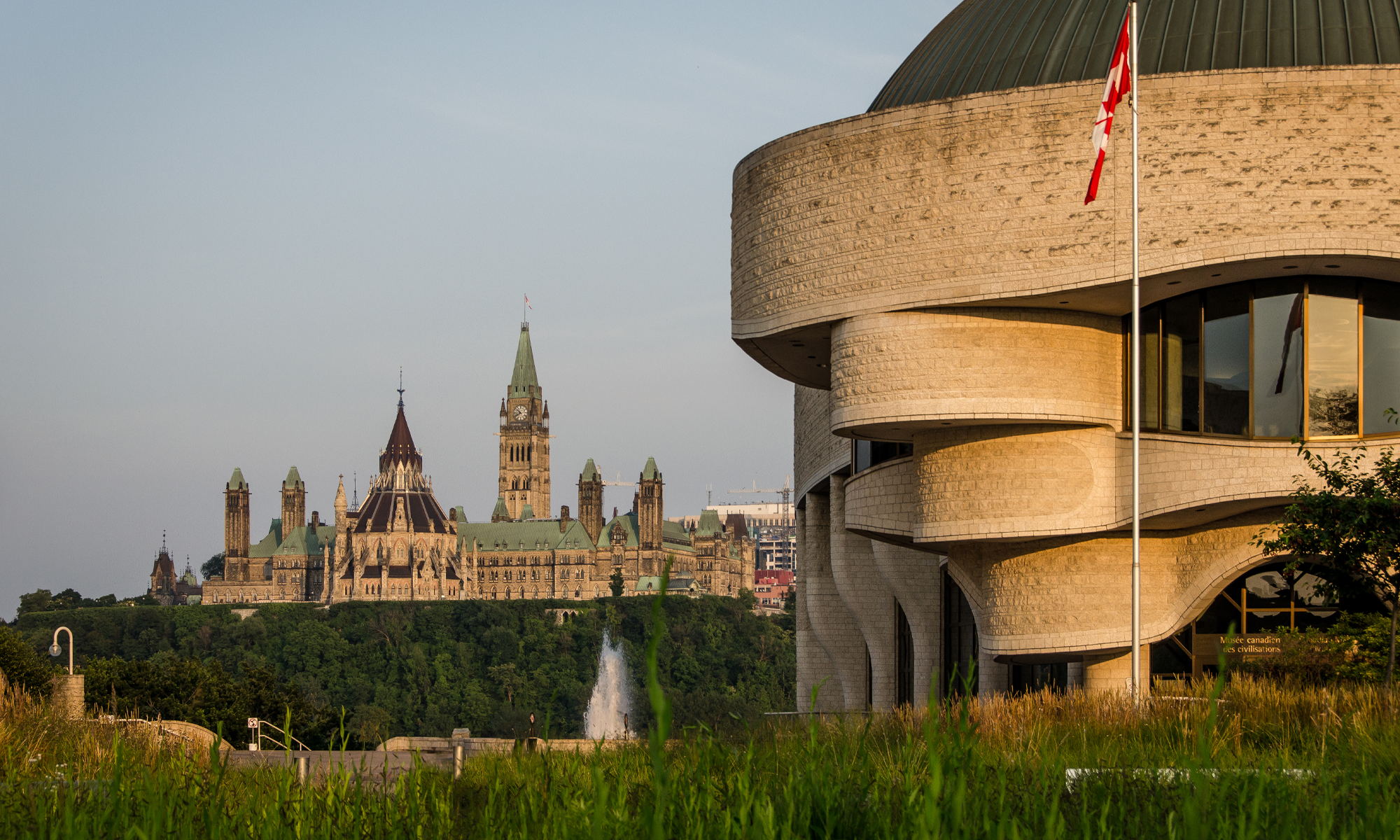

Today, Friday, 13 November 2026, is doomsday. Professor von Foerster and two colleagues at the University of Illinois published that prediction in 1960 in the respected journal Science.
https://theconversation.com/why-the-doomsday-prediction-of-1960-matters-today-295817
BIFHSGO November Meeting
 Join the British Isles Family History Society of Greater Ottawa on Saturday, 14 November 2026 for two presentations covering local genealogical discoveries and wartime clandestine operations.
9:00 a.m. EST: A Life Lost, A Face Found
Presenter: Sara MacKenzie
Sara MacKenzie recounts tracking down her great-granduncle, Donald McKenzie of Horton Township, whose story had vanished from family memory. Starting from an unexpected will discovered at the Arnprior & McNab/Braeside Archives, the trail wound through First World War service files, prairie newspapers, and archival photos to reveal the life of a young man cut down in his prime—bringing the search full circle to the archives where she now serves as Board President.
-
More about the speaker: Sara MacKenzie Profile
10:00 a.m. EST: Lilian: The Challenges of Researching and Writing the True Story of a Secret Radio Operator in WW2 France
Presenter: Paul McCue
Military historian Paul McCue details the life of SOE wireless operator Lilian Rolfe in Nazi-occupied France, her training in England alongside a Canadian agent from Camp X, and the archival obstacles faced in reconstructing her clandestine mission. McCue has written six books on wartime special operations and serves as Executive Trustee of the educational charity SECRET WW2.
Meeting & Registration Details
Find out more at https://www.bifhsgo.ca/events
-
In Person: Geneva Hall, Knox Presbyterian Church (Lisgar & Elgin). Use the Elgin Street Garden Entrance. Limited free street parking on Saturdays; City Hall garage is $2.00.
-
Online: Streamed live via Zoom. One registration covers both presentations.
Save up to 50% on Findmypast subscriptions
 Save up to 50% on selected Findmypast subscriptions with their limited-time family history sale, running until 16 November.
The best value is an annual subscription for $149.99 US. It likely applies to new subscriptions, but they offer a 15% loyalty discount on renewal each year after your first year.
Billed annually at $149.99
The discount covers access to billions of historical records, extensive parish registers, and their vast historical newspaper archives. Included are automated record hints, integrated newspaper clipping, and research Workspaces, which make organizing and citing evidence much smoother.
TheGenealogist Adds Burial Registers and Monumental Inscriptions from London, East Anglia, the West Country, the North of England and Dublin
 TheGenealogist has added a batch of burial registers, church memorial inscriptions and cemetery records to its collection. The additions, for more than a dozen places in England and Ireland, cover roughly 1562 to 1853, plus later monumental inscriptions in the cathedrals and cemeteries.
London: St Paul’s, Covent Garden, 1653–1853
The burial registers of St Paul’s Church, Covent Garden cover two centuries. The church was built in the 1630s as part of the Covent Garden development, and the registers run from the Commonwealth period through the Georgian era and into the 1850s. The first plague victim of the 1665 plague was buried at St Paul’s in Covent Garden in April of that year.
Suffolk: St James, Bury St Edmunds, 1562–1800
The parish registers of St James, Bury St Edmunds, start in the first years of Elizabeth I’s reign and run to 1800. St James later became the town’s cathedral, so these registers cover the parish church before that change. For most researchers, the registers’ value lies in 238 years of ordinary burials in a prosperous Suffolk market town.
Buckinghamshire: Bletchley parish registers
Bletchley recorded 126 burials in 1665, most attributed to plague, in a parish that normally buried about 20 or fewer people a year. Most of those deaths fell in August, September and October.
Durham and Hereford: cathedral memorials
Two cathedral cities are covered by monumental inscriptions. The Durham material includes memorials in the cathedral as well as in the surrounding churches and cemeteries. The Hereford volume covers monuments in the cathedral. Cathedral memorials tend to commemorate clergy, gentry and prominent townspeople.
Devon: a dozen churchyards
Churchyard inscriptions from a dozen Devon parishes are included; the press release doesn’t say which parishes
Ireland: Glasnevin Cemetery, Dublin
For Irish researchers, the collection includes records of historic graves at Glasnevin Cemetery. Glasnevin opened in 1832 and is Dublin’s best-known cemetery.
Weird Times at Library and Archives Canada: Budget and Departmental Results Report
-
The Budget
LAC is mentioned twice in the 5 November budget document.1. “Budget 2026 proposes to provide $783.1 million over five years, on a cash
basis, starting in 2026-27, to support Canada’s national museums, the
National Battlefields Commission, the National Arts Centre, and Library and Archives Canada. This investment will help repair and renew aging facilities, protect national collections, and sustain the exhibitions, performances, and services that connect Canadians to our history and culture.”
2. A table on Policy actions taken since the Spring Economic Update 2026 shows LAC as allocated an additional $ 1 million each year from 2027-2028 onward.
The last time LAC was mentioned in the budget document was in 2022 when ” $25 million over three years, starting in 2022-23, to Library and Archives Canada to support the digitization of millions of documents relating to the federal Indian Day School System”
-
LAC Departmental Results Report 2025–2026
Performance Indicator Comparison (2024–25 vs. 2025–26)
In 2024–25, LAC met 7 of 8 preservation indicators and 4 of 8 access indicators. In 2025–26, preservation held steady at 7 of 8, while access improved to 5 of 7 active indicators (as the Listen, Hear Our Voices contribution program sunset in March 2025).
| Indicator | Target | 2024–25 Actual | 2025–26 Actual | Trend & Status |
| Federal institutions transferring records | 10% | 13.14% | 21.6% | Improved (Target Met) |
| Increase in digital published titles | 25% | 40.4% | 13% | Stabilized (Below 25% benchmark, though LAC counts as met) |
| Target acquisition areas covered | 75% | 96% | 96% | Unchanged (Target Met) |
| Government records processed in standard | 60% | 61.2% | 68% | Improved (Target Met) |
| Published heritage processed in standard | 83% | 93% | 89% | Declined due to budget cuts (Target Met) |
| Private archives processed in standard | 75% | 91% | 98% | Improved (Target Met) |
| Analog preservation facility standards | 75% | 57% | 64.25% | Improved, but Target Missed |
| Digital material preserved (Cumulative) | 18,871 TB | 17,371 TB | 19,132 TB | Improved (Target Met) |
| Images digitized for access | 6.5 M | 10 M | 11.4 M | Improved (Target Surpassed) |
| Unique website/online visitors | 3 M | 2.9 M | 5.7 M | Improved; moved from missed to Target Met |
| Onsite and remote service transactions | 60,000 | 50,606 | 83,658 | Improved; moved from missed to Target Met |
| ATIP requests processed vs. total active | 70% | 66% | 69% | Improved, but Target Missed |
| Exhibition and event attendance | 150,000 | 161,992 | 222,193 | Improved (Target Met) |
| Collection items loaned for exhibitions | 75 | 88 | 44 | Declined; fell from met to Target Missed |
| DHCP recipients achieving results | 90% | 91% | 100% | Improved (Target Met; program now cancelled) |
What Has Improved
-
Digitization and Researcher Tools: Building on the 10 million images digitized in 2024–25, LAC reached 11.4 million images in 2025–26. It concluded the massive Federal Indian Day Schools digitization initiative and secured a $5 million philanthropic donation via the LAC Foundation to accelerate digitizing Second World War collections. For researchers, LAC finished migrating its last legacy databases into Collection Search (now indexing more than 70 million records), refined census search functionality to automatically link sub-district names with district numbers, and separated First World War personnel files from general war records.
-
AI-Assisted Transcription (Transkribus): LAC completed its first AI pilot using Transkribus for handwritten text recognition on Orders-in-Council registers, generating 55,000 new searchable descriptions. It is now applying this same workflow to census records and Second World War image indexes, although better AI options may now exist than Transkribus.
-
Client Service & Web Traffic Rebound: After stagnating in 2024–25 (when both website visits and service transactions missed their targets), online visitors nearly doubled from 2.9 million to 5.7 million, and service transactions across Ottawa, Halifax, Winnipeg, and Vancouver jumped by 65%—from 50,606 to 83,658.
-
Proactive Declassification and Opening: To bypass the ATIP bottleneck, LAC reviewed and proactively opened more than 12 million pages of archival government records, uploaded 7,083 previously released ATIP packages (nearly 980,000 pages) for self-service download, and lowered security classifications on more than 200,000 pages of classified government files.
-
Born-Digital Transfers & High-Profile Fonds: LAC completed its first direct digital transfer pilot with the Department of National Defence into its Digital Asset Management System (DAMS), cutting processing times from months to weeks. It also completed processing the Stephen J. Harper fonds (its largest digital acquisition ever, including 400,000 digital records and over 1 million photos) and major portions of the Canadian National Railway (CN) fonds.
What Hasn’t Improved (Or Slipped)
-
ATIP Still Falls Short of Target: Processing crept up from 66% in 2024–25 to 69% in 2025–26—tantalizingly close to the 70% benchmark, yet still failing to meet it for another consecutive year. While the overdue backlog proportion dropped from 71% to 55% through better triage, more than half of active requests remain overdue. Why is a target short of legislative requirements satisfactory?
-
Analog Facility Environmental Standards: This remains the sole blemish under Core Responsibility 1. While the metric rose from 57% to 64.25% of total vault volume ($m^3$), it remains well short of the 75% target. LAC’s three purpose-built facilities in Gatineau hit 90% compliance, meaning older storage sites (such as the Renfrew facility, currently undergoing roof and electrical replacements) continue to drag down the average and force LAC to relocate vulnerable items.
-
Exhibition Loans Cut in Half: After loaning 88 items in 2024–25 (beating the target of 75), loans dropped to just 44 items in 2025–26, which LAC attributes to fewer external requests.
-
Published Heritage Processing Speed & Digital Deposits: While still above the 83% standard, timely cataloguing of published heritage slipped for the second year in a row (from 94% in 2023–24 to 93% in 2024–25, down to 89% in 2025–26). The Report explicitly notes this drop is the direct result of budget and resource reductions. Meanwhile, the annual growth rate of digital legal deposits cooled from 40.4% to 13%, missing the 25% growth target.
-
Ādisōke Opening Delays: While construction progressed to roughly 85% completion by spring 2026 and internal programming plans (such as the joint Family History Centre with OPL) are taking shape, the report formally notes the City of Ottawa’s announcement that the facility’s opening is delayed.
What Remain Major Concerns
-
Steep Budget and Staffing Cuts Ahead: The financial and human resources tables reveal a severe fiscal cliff driven by the sunsetting of temporary initiatives, Budget 2023 Refocusing Government Spending targets, and Budget 2025 Comprehensive Expenditure Review reductions.
-
Total Spending dropped from $212.4M (2024–25) to $194.5M (2025–26), and is projected to fall to $129.9M by 2028–29—an early 39% reduction from 2024–25 levels.
-
Core Responsibility 2 (Access) Spending takes the hardest hit on paper, dropping from $83.5M in 2024–25 to $69.3M in 2025–26, and plunging to $27.8M by 2028–29 (though footnotes clarify that permanent future ATIP funding is not yet factored into those out-year tables).
-
Workforce (FTEs) dropped from 1,201 in 2024–25 to 1,061 in 2025–26, with indeterminate and term reductions projected to shrink staff to 707 FTEs by 2028–29 (with Access staff cut more than half on paper, from 460 in 2024–25 to 192 in 2028–29).
-
-
Termination of the Documentary Heritage Communities Program (DHCP): Even though DHCP achieved a 100% success rate in 2025–26 across 28 evaluated reports, LAC announced it is discontinuing the program entirely to save costs. Combined with the sunsetting of the Listen, Hear Our Voices Indigenous heritage grant program in March 2025, local archives, historical societies, and genealogical groups across Canada have lost vital federal grant support.
-
Planned Reductions in ATIP and Proactive Access: Despite ATIP still missing its 70% compliance target, LAC announced a “gradual reduction in ATIP and Proactive Access activities” and began shedding ATIP term employees in 2025–26 to live within permanent baseline funding. Scaling back proactive opening and ATIP staff as backlogs begin to recede risks reversing hard-won gains for researchers. Note the comment that anticipated “permanent future ATIP funding” is not yet accounted for.
- Future Funding — 88 percent of the cut is allocated to providing access to documentary heritage.
Table 12 shows that between 2026-27 and 2028-29, LAC will see a $55 million budget cut.
How much of the $48 million cut in providing access will be reversed by LAC’s share of the “$783.1 million over five years, on a cash basis, starting in 2026-27, to support Canada’s national museums, the National Battlefields Commission, the National Arts Centre, and Library and Archives Canada”? It would require about one-third of that allocation to offset the current programmed reduction.
Remembrance Day

In Flanders Fields, by John McCrae
In Flanders fields the poppies blow
Between the crosses, row on row,
That mark our place; and in the sky
The larks, still bravely singing, fly
Scarce heard amid the guns below.
We are the Dead. Short days ago
We lived, felt dawn, saw sunset glow,
Loved and were loved, and now we lie,
In Flanders fields.
Take up our quarrel with the foe:
To you from failing hands we throw
The torch; be yours to hold it high.
If ye break faith with us who die
We shall not sleep, though poppies grow
In Flanders fields.
This Week’s Online Genealogy Events
Choose from these selected free online events. All times are Eastern Time, unless otherwise noted. Registration may be required in advance—please check the links to avoid disappointment. For many more events, mainly in the U.S., visit https://conferencekeeper.org/virtual/
Tuesday, 10 November
2:00 PM: Ottawa Virtual Genealogy Drop-In, by OGS Ottawa Branch. https://ottawa.ogs.on.ca/events/
2:00 PM: DNA Matches on MyHeritage: From Chaos to Clarity, by Kate Penney Howard for Legacy Family Tree Webinars. https://familytreewebinars.com/upcoming-webinars/
2:30 PM: Stories of the Final Chapter: What Death Records Reveal – About Our Ancestors, by Allen County Public Library Genealogy Center.
https://acpl.libnet.info/event/17653046
7:00 PM: The Teacher Goes Off To War, by Ron Gilmore for OGS Lambton County Branch. https://lambton.ogs.on.ca/events/november-10-2026-webinar-ron-gilmore/
Wednesday, 11 November
2:00 PM: Following the Armies: Researching Military Maps, by Michael L. Strauss for Legacy Family Tree Webinars. https://familytreewebinars.com/upcoming-webinars/
Thursday, 12 November
7:00 PM: Lending a Hand and Bending a Back: The Story of the Farmerettes 1941-1952, for OGS Essex Branch and HEIRS. https://essex.ogs.on.ca/events/essex-branch-heirs-nov-2026-webinar-lending-a-hand-and-bending-a-back-the-story-of-the-farmerettes-1941-1952/
Friday, 13 November
2:00 PM: Researching in Devon, by Janet Few for Legacy Family Tree Webinars. https://familytreewebinars.com/upcoming-webinars/.
7:00 PM: The Bandit of Skunks Misery, for OGS Kent Branch (hybrid meeting). https://kent.ogs.on.ca/events/kent-branch-november-13-hybrid-presentation-the-bandit-of-skunks-miser.
Saturday, 14 November
9:00 AM: A Life Lost, A Face Found, by Sara MacKenzie for BIFHSGO.
10:00 AM: Lilian: the challenges of researching and writing the true story of a Secret Radio Operator in WW2 France, by Paul McCue for BIFHSGO
https://www.bifhsgo.ca/events
New for Scotland
National Records of Scotland (NRS) and ScotlandsPeople made two notable announcements in the past seven days:
-
WWI Pensions Appeal Tribunal Records Online: Released on 5 November 2026, ScotlandsPeople launched more than 25,000 case files from the military Pensions Appeal Tribunals for Scotland. These cover appeals by First World War veterans or their surviving dependents and include detailed medical assessments, service histories, witness statements, and personal correspondence about disability claims and pensions. More at https://www.scotlandspeople.gov.uk/news-and-articles/graveyards-hope-pensions-appeal-tribunals-scotland
-
Updated Scottish Family History Guide: Published on 6 November 2026, NRS released an updated official guide book for tracing Scottish genealogy, outlining modern methodologies, revised record sets, and step-by-step navigation for statutory, church, and court records. More at https://www.nrscotland.gov.uk/latest-news/uncover-your-scottish-roots-with-updated-guide-book/
Sunday Sundries
Miscellaneous items I found interesting this week.
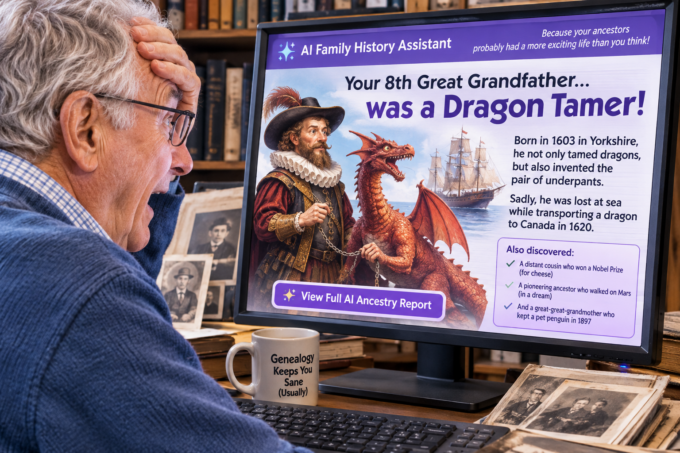
AI can make mistakes. Double-check responses
This Little World: A New History of Tudor and Stuart England
At 2:30 PM ET on 11 November, historian Nandini Das in conversation with Neil Johnston, Head of Early Modern Records at The National Archives (UK).
Tracing the Spread of Celtic and Germanic Languages Using Ancient Genomics (Video)
A First Full-Count Linking of English and Welsh Censuses, 1851–1921
This publication in the Cambridge Working Papers in Economic and Social History series successfully linked 56.26% of all ‘linkable’ individuals between successive censuses across the entire period. The paper describes the method in detail, which relies heavily on a technique proposed in 1969 by Ivan Fellegi (former head of Statistics Canada) and co-author Alan Sunter.
The Soldiers of Oxfordshire Museum
The integration of the Oxfordshire Aviation Archive, which provides family and military historians access to new personal papers, flight logs, and service records, was recently completed.
London’s Poverty Maps – Discover Where Your Ancestors Lived
Thanks to the following individuals for their comments and tips: Anonymous, Elise, Gail, Glenn Wright, Teresa, Unknown.

Findmypast Weekly Update
With Remembrance Day approaching, this week’s Findmypast release carries a strong military focus, featuring First World War pension award case files from The National Archives, major additions and access to British Army Service Records from 1760 to 1939, and an update to the British Newspaper Archive adding 269,680 pages across five new titles and 29 updated publications.
British Armed Forces First World War Pensions Award Files
Drawn from The National Archives series PIN 26, this collection of First World War pension records comprises representative case files created by the Ministry of Pensions. Transcribed and enhanced by volunteers from the Friends of The National Archives, these 22,869 records document war pension awards and offer deep insights into the human cost of the conflict. The files encompass serving soldiers, officers, dependants, widows, nurses, and personnel from the Royal Navy, Royal Air Force, and mercantile marine services. Because transcripts are organised by the serviceman’s name, dependants and widows are located through the service person’s file.
The PIN 26 series arrived at The National Archives in two distinct tranches: pieces PIN 26/1–203 (transferred in 1975) are listed by date of pension termination or death with selection code letters, while PIN 26/204–22756 (transferred between 1989 and 1997) detail covering dates, names, and the nature of disability.
Searchable fields include name, year, regimental number, rank, regiment, description, notes, nature of disease or disability, archive reference, sub-series, and covering dates.
British Army Service Records
Spanning nearly two centuries from 1760 to 1939, this massive collection brings together more than 8.1 million documents across 17 distinct series from The National Archives and the Scots Guards at Wellington Barracks. The papers document both commissioned officers and other ranks, tracing men through attestation papers, medical examinations, regimental board proceedings, discharge papers, and pension awards.
A central strength of the collection lies in the variety of War Office (WO) series represented. These include Royal Hospital Chelsea in- and out-pension records (WO 22, WO 23, WO 97, WO 121, and WO 131), Militia service records (WO 96), Imperial Yeomanry papers from the South African War (WO 128), and Household Cavalry records (WO 400). For the First World War, the collection provides surviving records from the “burnt documents” in WO 363 (two-thirds of which were lost during the September 1940 Blitz on Arnside Street), intact disability pension files in WO 364 administered by the Ministry of Pensions, and officer personal files in WO 339 and WO 374.
Transcript details typically include first and last name, birth year, birth county and country, service number, rank, regiment, battalion, attestation age and date, residence, pension information, date of death (if died in service), document type, and archive series. Accompanying original images often provide rich biographical context, including physical descriptions, previous civilian occupations, marital status, religion, next-of-kin names and addresses, and complete campaign histories.
Newspapers
The British Newspaper Archive / Findmypast newspaper holdings expanded by 269,680 pages this week across five new titles and 29 updated publications. Notably, this week’s new additions feature a distinctive run of late 18th- and 19th-century periodicals aimed at women, highlighted by extensive runs of The Lady’s Magazine and the Lady’s Monthly Museum.
New Titles
| Title | Years Added | Pages Added |
| Christian Lady’s Magazine | 1834–1841, 1843–1846 | 11,540 |
| Lady’s Magazine | 1770–1814, 1816–1823, 1828–1830 | 41,110 |
| Lady’s Magazine and Museum | 1832–1836 | 3,948 |
| Lady’s Monthly Museum | 1798–1832 | 27,340 |
| Maids, Wives and Widows Magazine | 1832–1833 | 348 |
Updated Titles with More Than 10,000 Pages Added
| Title | Years Added | Pages Added | Total Years Covered |
| Derby Daily Telegraph | 2000, 2004 | 44,150 | 1879–2000, 2002–2004 |
| Bristol Evening Post | 2005 | 30,758 | 1939, 1949, 1951–1999, 2001, 2003–2005 |
| Heartland Evening News | 2002, 2004–2005 | 27,800 | 1992–1999, 2002, 2004–2005 |
| Nottingham Recorder | 2000, 2002–2003, 2005 | 12,614 | 1981–2000, 2002–2003, 2005 |
| Herts and Essex Observer | 2000, 2003 | 12,382 | 1862–1863, 1874–1875, 1877–1889, 1921, 1930–2000, 2003 |
(Note: Among the new titles, Lady’s Magazine with 41,110 pages, Lady’s Monthly Museum with 27,340 pages, and Christian Lady’s Magazine with 11,540 pages each added well over 10,000 pages.)
Ideal Homes: A history of South-East London suburbs
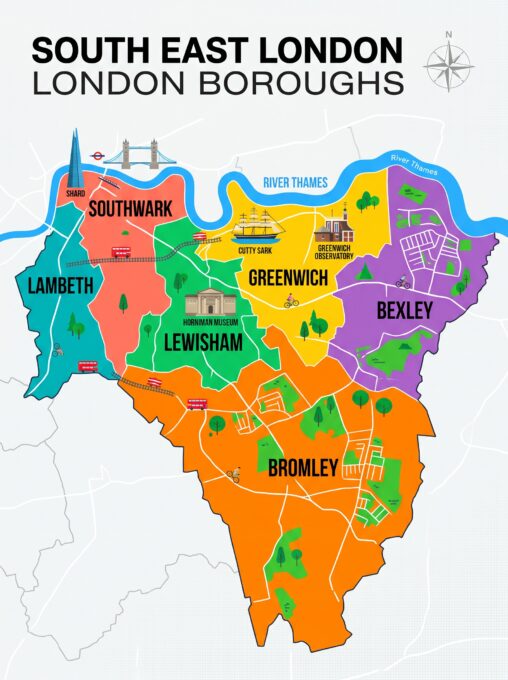 Bexley, Bromley, Greenwich, Lambeth, Lewisham, and Southwark.
If one or more of those London Boroughs appears in your family history, browse to https://ideal-homes.gre.ac.uk/boroughs.html. For each, find histories, galleries, historic maps, case studies and individuals’ contributions for communities within the borough.
BIFHSGO has an extensive list of London Resources found under its Links to Online Resources page.
MyHeritage Introduces GAIA, a Groundbreaking AI Agent
 “GAIA (Genealogy AI Agent) plans and conducts research, searches billions of historical records on MyHeritage and external online sources, and presents evidence-backed findings to help users achieve breakthroughs in their research.” Check out the extended MyHeritage blog post Introducing GAIA, MyHeritage’s Groundbreaking Genealogy AI Agent.
I received advanced access and tested it against a couple of my longest-standing genealogy challenges. It made no progress and kept on asking if I had additional information. I then tried researching David Arthur Clarke, the convict mentioned in yesterday’s Weird Times blog post. Using the information disclosed in the ATiP file it identified additional sources, including an LAC file that blocked MyHeritage from accessing it directly.
You need patience to work with GAIA. It will suggest sources and offer to look them up where it can. That stops it wandering off on the wrong track — you keep control.
If you have a MyHeritage account GAIA is worth a try. Just manage your expectations.