
Productivity at Library and Archives Canada

There was a positive reaction to Saturday’s experimental post, Bytown 200th: Ottawa’s History, which included an audio debate generated by NotebookLM. Let’s try another.

An opinion article in Monday’s Globe and Mail by Charles Lammam under the headline “Productivity is an urgent problem for Canada…” claimed that “From 2014 to 2024 labour productivity grew at just 0.3 per cent per year on average — less than a third of the American rate.”  American must mean U.S. Among a long list of structural failures, Lammam includes “a public sector growing in size but declining in effectiveness and productivity.”

My input provided to NotebookLM was

  • the object (mission) from The Library and Archives Canada Act,
  • Gemini’s response to the prompt “I’m considering writing a blog post on the productivity of Library and Archives Canada as an organization. As an expert on productivity in the sector, please suggest an approach.”
  • Gemini’s response to the follow-on prompt “I’d like to start with a long-term perspective on resources used by the organization.”
  • Gemini’s response to the follow-on prompt “Please take a more critical approach.”

NotebookLM’s synthesis was

“Library and Archives Canada (LAC) is currently navigating a complex productivity shift as it transitions from traditional paper-based archiving to a high-output digital factory model. Despite broader national concerns regarding public sector inefficiency, the agency has achieved record-breaking digitization targets through the use of artificial intelligence and strategic infrastructure investments. However, this technical success is contrasted by a persistent operational debt found in backlogged information requests and aging physical storage standards. Current fiscal pressures have resulted in workforce reductions, forcing the organization to balance a shrinking headcount against an increasing demand for digital preservation. Ultimately, the sources highlight a central tension between LAC’s mission to expand public access and the financial reality of maintaining a massive national heritage collection.”

Here’s the audio debate.

A tension between preservation and access at LAC continues. Time will tell whether the digitization effort of the past year will continue. There’s no lack of material. Will it, along with AI, lead to significant advances in access as we’ve seen with the FamilySearch Full Text search initiative? What do you think?

 

This Week’s Online Genealogy Events

Choose from these selected free online events. All times are Eastern Time, unless otherwise noted. Registration may be required in advance—please check the links to avoid disappointment. For many more events, mainly in the U.S., visit ConferenceKeeper.


Tuesday, 24 February

Thursday, 26 February

Friday, 27 February

Saturday, 28 February

1:00 PM: Birchtown’s People and Stories, by Stephen Davidson for Kingston and District Branch, United Empire Loyalists’ Association of Canada. https://kingston.uelac.ca/upcoming-meeting/

LAC Co-Lab Update

When I posted about Co-Lab in May, I wrote:

Co-Lab participation is declining, with the number of contributions and completion percentages dropping for several projects. Only one project (Winnipeg General Strike of 1919) showed progress, while others stagnated or regressed.

In a time of decreasing resources, why is the Co-Lab Challenges project continuing?

Here’s how the stats have changed in 9 months:

Games of the XXI Olympiad, Montréal 1976, remains 80.8% complete since May.
Treaty 9 photographs from northern Ontario, remains 4.7% complete.
Mary Ann Shadd Cary, remains at 85.5 % complete.
Expo 67, increased from 5.1% to 6.8% complete.
Summiting Mount Logan in 1925 is now 95.5% complete, up from 17.0%.
Women in the War, remained 1.4% complete.
Arthur Lismer’s Children’s Art Classes remains <1% complete.
John Freemont Smith, RG10, Volume number: 4079 remains 88.5% complete.
Molly Lamb Bobak increased to 95.6 from 95.1% complete.
Diary of François-Hyacinthe Séguin remains 99% complete.
George Mully: moments in Indigenous communities remains 0% complete.
Correspondence regarding First Nations veterans returning after the First World War remains 98.5% complete.
Winnipeg General Strike of 1919 remains 94.7% complete.
Legendary Train Robber and Prison Escapee Bill Miner remains 99.5% complete.
Japanese-Canadians: Second World War is 22.2% complete, up from 19.4%.

11 of 15 challenges saw no change.

Last May, 4,199 items were identified as Co-Lab-only contributions in the collection. Now there are 3,122. What happened?

What lessons has LAC learned from Co-Lab?


Sunday Sundries

Miscellaneous items I found interesting this week.

BBC WDYTYA on YouTube

The YouTube algorithm surfaced some classics from the long-running BBC series, mostly older episodes (when they were featuring people I’d heard of).
Judy Dench
Nigella Lawson
David Tennant
Jeremy Irons
Stephen Fry
Kate Winslet

The new AI inflection point

Rather than writing computer code, the programmer’s task has become reviewing code written by AI. Will the same thing happen with family history research? Would you go back to the days, not so long ago, when your computer didn’t serve up hints about related resources? That’s AI.

The Cyberattack That Exposed the Fragility of Digital Heritage

About the British Library ransomware attack.

MyHeritage adds United Kingdom, British Army Lists, 1839-1946

On 16 February, MyHeritage added 5,854,883 British Army List records, primarily from the World War II era (1938–1946).  These official lists document the service of commissioned officers in the regular, militia, and territorial army, typically including the officer’s name, rank, regiment, and seniority dates. Follow promotions and reassignments.

Ancestry Find A Grave Updates

On 20 February Ancestry reported:

UK and Ireland, Find a Grave® Index, 1300s-Current had been updated to  24,458,579 records, up from 23,818,332 at the end of 2025.

Canada, Find a Grave® Index, 1600s-Current was updated to 12,080,203 records, up from 11,905,737.

Thanks to the following individuals for their comments and tips: Anonymous,  Christine Jackson, Dawn Kelly, Dianne Brydon, Gail, Grant, Mary Grace Kosta, Sue Lambeth, Terry Mulcahy and Unknown.


Findmypast Weekly Update

Britain, Phillimore Atlas and Index of Parish Registers

Now available to search and view, with a zoom capability, the Phillimore Atlas is a classic resource. It is specifically designed to help genealogists locate the precise church parishes where ancestors lived before the 1832 Victorian boundary reforms. If you don’t see the map with boundaries or the index listing years available at different locations, click “filmstrip” and move to the adjacent images.

  • Coverage: England, Wales, and Scotland.

  • Details: Includes parochial and topographical maps showing ancient boundaries, probate jurisdictions, and the starting dates of surviving registers.

  • Records added: 13,696.

Monumental Inscriptions and Burials

Three distinct collections of death and burial records have been expanded, providing details often missing from civil registration, such as family members listed on the same headstone.

  • Scotland Monumental Inscriptions: 2,249 records added (1807–2009). These transcripts often include the “Inscription” field, which can reveal military service, causes of death, and multiple generations buried in the same plot.

  • Yorkshire Monumental Inscriptions: 8,080 records added (1706–2024). This update includes a significant number of records from the Heaton Baptist Highgate Cemetery in the West Riding.

  • Kent Burials: 17,226 records added (1934–2000). These records, provided in association with local archives and family history societies, include images and transcripts for various parishes within the Archdeaconry of Canterbury.

Newspapers

Unusually, just two updates this past week. Maybe they took time off to celebrate reaching the 100-million-page milestone.

  • Dundee Courier: Over 206,000 pages added covering 1956–1985 and 1998–2004.

  • New Observer (Bristol): New pages added for 1972.

Bytown 200th: Ottawa’s history

To commemorate the 200th anniversary of the founding of Bytown, the City of Ottawa Archives is presenting a serialized look at the community’s early development.

There’s an introduction here.

I wondered whether AI, using only that document, could bring the situation to life by raising the emotional level and amplifying conflict through debate and disagreement. So I asked NotebookLM to do that. Listen to the result below. This is an experiment. I’ve not previously tried adding audio to blog posts. The file may not play in all browsers.


Watch for more chapters in 2026 from the City Archives, following the journey as told through its archival collection. Would you like the blog to experiment more with AI based on future chapters from the city archives?

Ancestry updates “UK, Selected Smaller Units Service Records, 1921–1959”

This collection now holds 228,677 records drawn from WO 421 at The National Archives, Kew.

Most records relate to the discharge of over-age personnel who served during the Second World War (1939–1945), though the collection spans 1921–1959. It covers twelve corps, including the Royal Military Police, Royal Army Pay Corps, Royal Pioneer Corps, Intelligence Corps, and Non-Combatant Corps, among others.

Each service member has a packet that may contain attestation forms, statements of service, B102 tracer cards, and B103 service and casualty forms. Between them, these documents can provide name, birth date and place, occupation, height, weight, distinguishing marks, next of kin, nationality, religion, residence, marriage details, death details, enlistment and discharge dates, regiment, and service number. Medical and conduct forms were excluded for privacy reasons.

I found records indexed for people mentioned in the document, and index entries where the indexed member couldn’t be found in the linked document.

How Genealogy has Transformed our Understanding of the Irish in Canada

BIFHSGO is honoured to present the inaugural event celebrating the Irish Genealogical Research Society‘s 90th anniversary. 

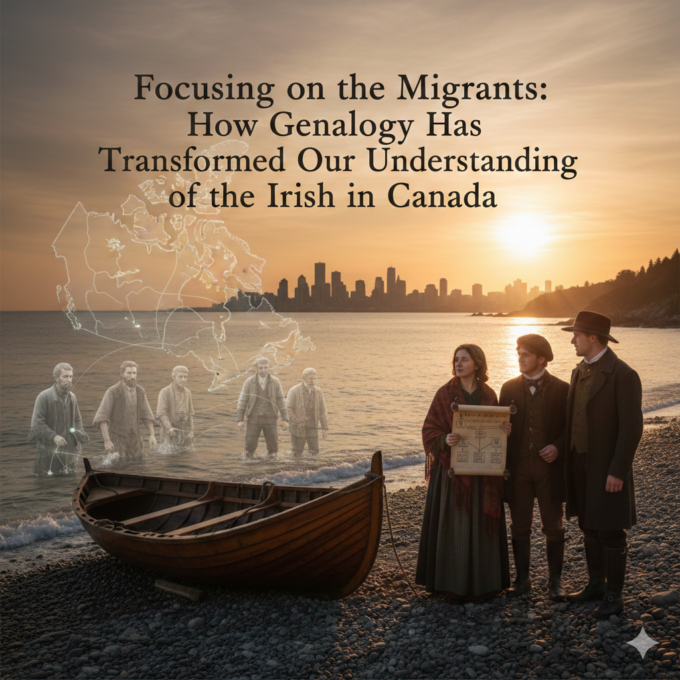
The lecture, titled “Focusing on the Migrants: How Genealogy Has Transformed Our Understanding of the Irish in Canada,” will be presented on Saturday, 28 March in person at Knox Presbyterian Church in Ottawa. It’s also online for those elsewhere.

David A. Wilson, Professor of History and Celtic Studies at the University of Toronto and General Editor of the Dictionary of Canadian Biography, will discuss how genealogical research has played a key role in opening new perspectives on the Irish in Canada. After a general overview of Irish-Canadian history, he will present three case studies that highlight the contributions of genealogy to historical research.

Find out more and register here.

Heritage Day 2026 at Ottawa City Hall

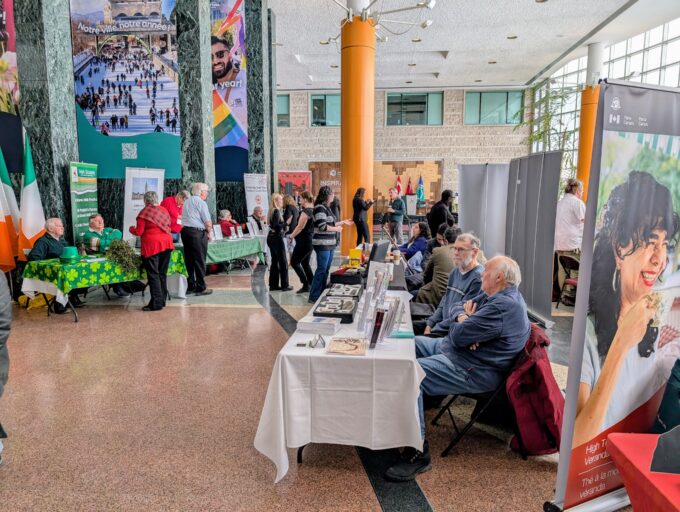
Above-freezing temperatures and sunny skies, after the fog burned off, encouraged good attendance at the annual Heritage Day event on Tuesday, 17 February 2026. Organizations were there early to set up their display tables.

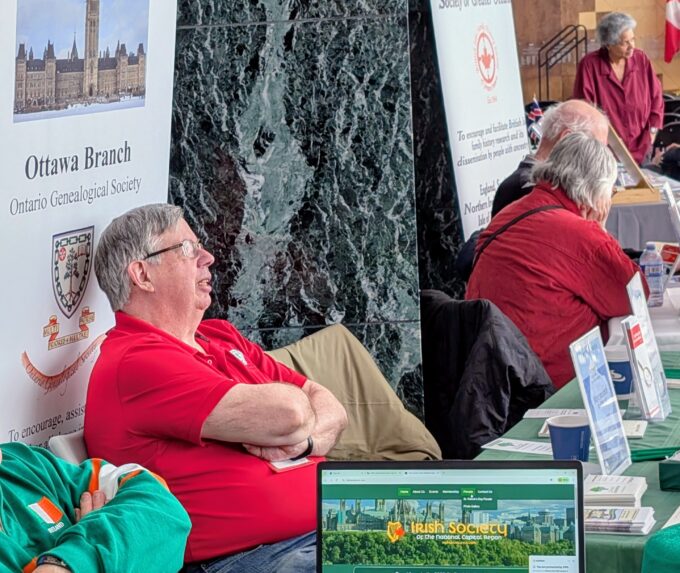
Mike More and Doug Grey were at the Ottawa Branch table, sandwiched between those ofthe Irish Society and BIFHSGO.

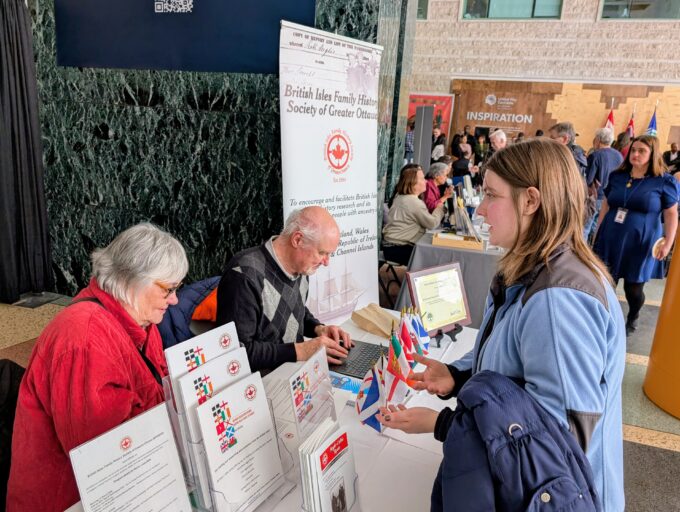
For BIFHSGO, Sue Lambeth and Paul Cripwell staffed the table, seen here helping one of the younger attendees.

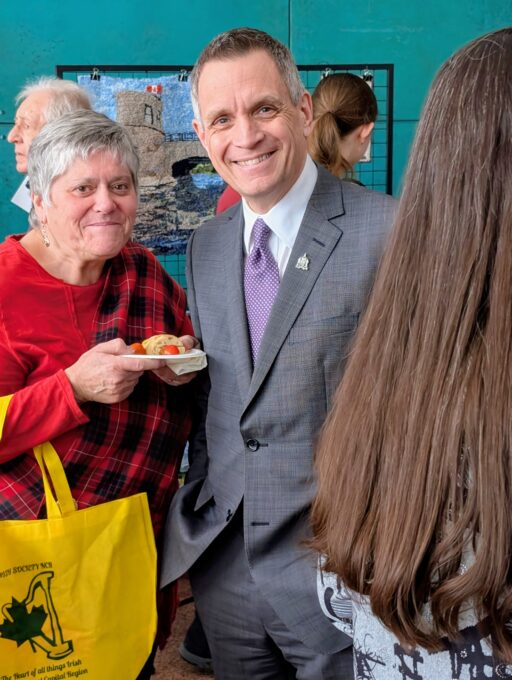
Other BIFHSGO members seen were David Jeanes and Christine Jackson. Dianne Brydon was seen chatting with Mayor Mark Sutcliffe.

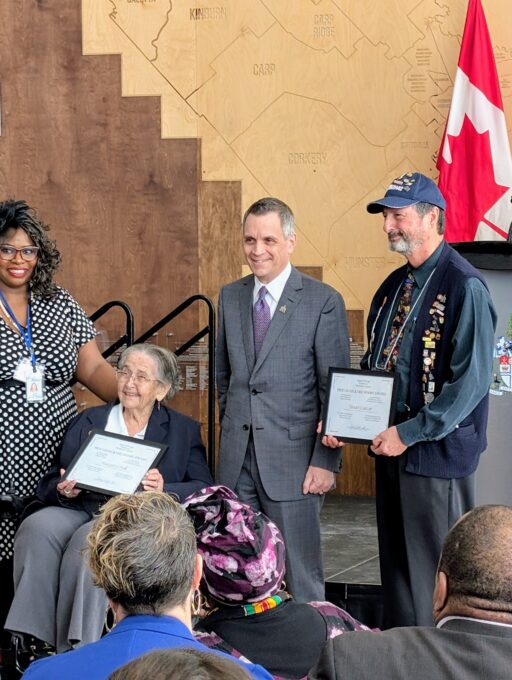
The event, organized by Capital Heritage Connexion with help from the community, featured heartfelt, if not scintillating, speeches and presentation of the Louise & Eric Moore Award for Outstanding Heritage Volunteerism to Stuart Lazear and Margaret Hall. Louise and Eric were BIFHSGO members.


Ancestry New Hampshire Records

I usually omit any mention of US records. These new and updated New Hampshire records drew my attention because they included a couple of unusual record types, and the state borders Quebec.

Title Records
NEW
New Hampshire, U.S., Non-Resident Tax Lists, 1849-1880 112,149
New Hampshire, U.S., Name Changes, 1824-1933 20,775
New Hampshire, U.S., Records of Indentures, 1743 5,229
UPDATED
New Hampshire, U.S., Divorce Certificates, 1850-1974 158,511
New Hampshire, U.S., Death Records, 1678-1974 2,311,671
New Hampshire, U.S., Marriage Records, 1700-1974 3,812,622

This Weeks Online Genealogy Events

Choose from these selected free online events. All times are Eastern Time, unless otherwise noted. Registration may be required in advance—please check the links to avoid disappointment. For many more events, mainly in the U.S., visit https://conferencekeeper.org/virtual/


Tuesday, 17 February

2 PM: Ottawa Virtual Genealogy Drop-In, for OGS Ottawa Branch.
https://ottawa.ogs.on.ca/events/virtual-genealogy-drop-in-2-2026-01-06-2026-01-20-2026-02-03-2026-02-17/

2:30 PM, Reimagining Family History Storytelling in a World
Transformed by Data, by Barbara ? for Allen County Public Library Genealogy Center.
https://acpl.libnet.info/event/15551991

7 PM: Tracing 20th Century Ontarians, by Janice Nickerson for OGS Nipissing Branch.
https://nipissing.ogs.on.ca/events/nipissing-branch-tracing-20th-century-ontarians-janice-nickerson/

8:00 PM: Lineage in Context: Creating a Compelling Kinship-Determination Project. by Angela Packer McGhie for BCG and Legacy Family Tree Webinars.
https://familytreewebinars.com/webinar/lineage-in-context-creating-a-compelling-kinship-determination-project/


1:00 PM: Lunch & Learn – Exploring Our (OGS) Society Research Resources, for OGS.
https://ogs.on.ca/events/lunch-learn-exploring-our-research-resources-2/

2:00 PM: DNA in Action 1 of 6: Proving Your Pedigree with DNA, by Karen Stanbary for Legacy Family Tree Webinars.
https://familytreewebinars.com/webinar/dna-in-action-1-of-6-proving-your-pedigree-with-dna/

7:00 PM: Demolition By Neglect, by Lesley Collins for Heritage Ottawa.
https://heritageottawa.org/en/lecture-series

6:30 PM:  From Church Archives to KGB Archives, by Carolyn Schott for Allen County Public Library Genealogy Center.
https://acpl.libnet.info/event/15525898

Friday, 20 February

2:00 PM, Emigration and Migration from Yorkshire, England, by Jude Rhodes for Legacy Family Tree Webinars.
https://familytreewebinars.com/webinar/emigration-and-migration-from-yorkshire-england/

7:00 PM: Retracing Freedom in Canada: Following Harriet Tubman’s Path North, by Douglas Mitchell for OGS Niagara Peninsula Branch
https://niagara.ogs.on.ca/events/harriet-tubman-in-canada-with-douglas-mitchell-niagara-peninsula-branch-webinar-series/

Saturday 21 February

10:00 AM: Exploring the ScotlandsPeople Website, by Christine Woodcock for OGS Kingston Branch.
https://kingston.ogs.on.ca/events/kingston-branch-ogs-meeting-2026-02-21-to-be-announced/

10:00AM: Princes, prelates and Palatines – gain new perspectives on the Great Migration of 1709, by Claire McCormick for the OGS Irish Palatine Special Interest Group of Ontario Ancestors
https://ip-sig.ogs.on.ca/

It’s also featured for OGS Quinte Branch.
https://quinte.ogs.on.ca/events/february-21-2026-at-1000am-zoom-event-irish-palatine-presentation-from-dr-claire-mccormick/


Impact of Weather and Climate on Family History

A survey reported in the 11 March issue of The Weekly Genealogist, by American Ancestors, found that 7% of respondents had at least one parent who relocated due to climate/weather issues.
Assuming the statistic applies across generations, what is the likelihood that at least one ancestor relocated due to weather/climate issues?

Generations (n) Total Ancestors (N)
Probability of Having at Least One Weather or Climate Migrant Ancestor
1 (Parents) 2 7.00%
2 (Grandparents) 6 19.56%
3 (G-Grandparents) 14 39.83%
4 (GG-Grandparents) 30 66.33%
5 (GGG-Grandparents) 62 89.46%
6 (4G-Grandparents) 126 98.97%
7 (5G-Grandparents) 254 99.99%
8 (6G-Grandparents) 510 ~100.00%

As the weather will impact a nuclear family equally, if they move, all will move; it’s likely that many more than one will have moved. There’s an assumption that all ancestors in the tree are unique (no pedigree collapse).

In the American Ancestors survey, based on 3,355 responses, 40% reported not being aware of any of their ancestors relocating because of climate/weather.

Does that imply 60% were aware? If so, and considering the estimates in the table, it suggests that at about the G-Grandparent to GG-Grandparent level, people become unaware of the impact of climate and weather on their ancestors’ migration.

The survey was restricted to migration caused by climate or weather. Other impacts, including death, would need to be included to evaluate the importance for family history.