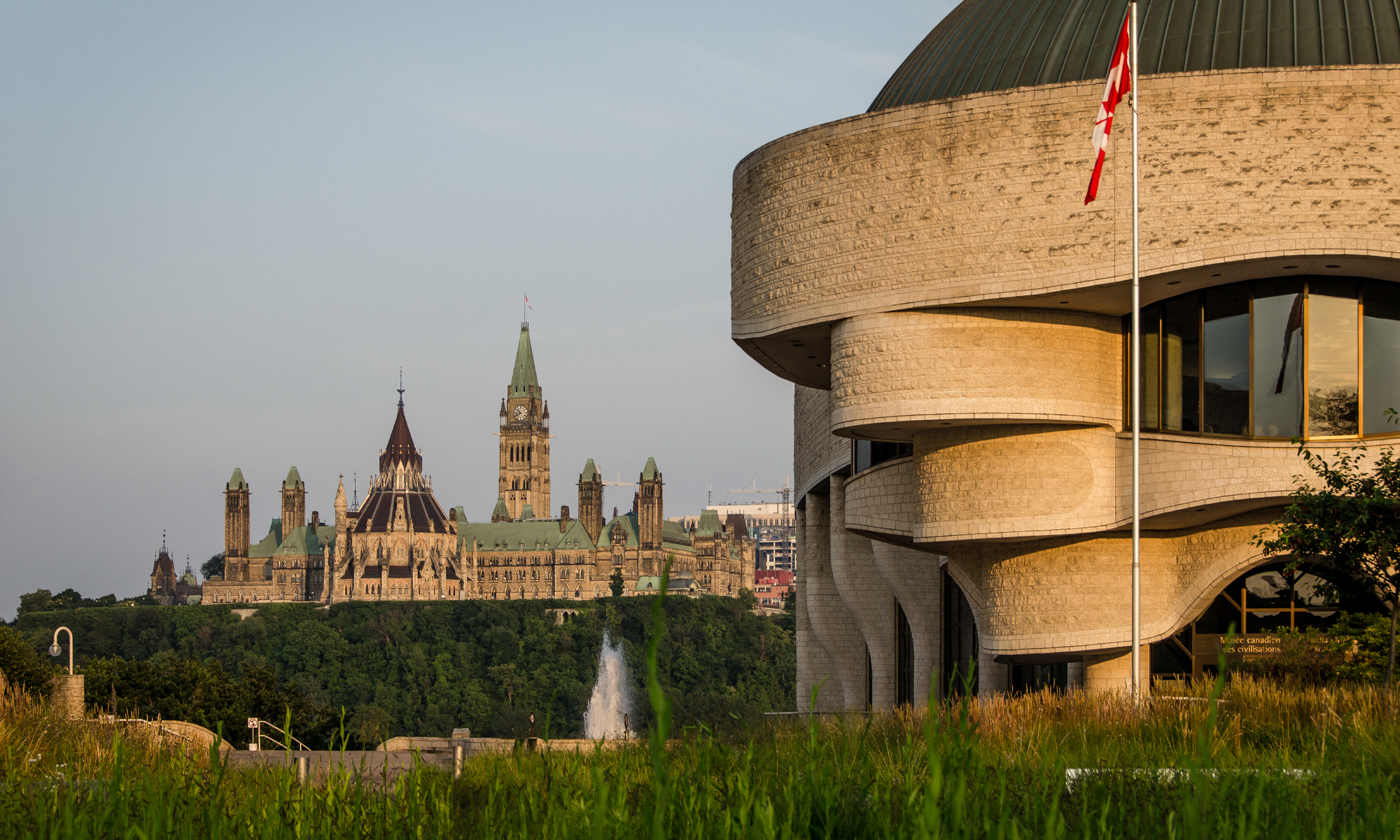

This new to Ancestry title has 570,090 records. Some are indexes, with name date and a portrait. Some link to a full obit. There’s a mix of anglo names with the majority francophone.
Family Tree Magazine: October 2026
 Using forenames in family history research. Chloe O’Shea tells how a little knowledge of forenames can take your research to a new level
Commonwealth Marriages – the impact of Oliver Cromwell on the records. David Annal looks at the marriage legislation introduced under Cromwell’s Commonwealth
Hidden figures – tips for tracing female ancestors. Phil Isherwood explains why women tend to be less well represented in the official records and suggests some strategies that might help in researching female ancestors more effectively
Regimental music. Graham Bandy takes a look at the military music that soldier ancestors marched to, from dawn to dusk, to celebrate and commemorate…
Karen Evans explains how GEDmatch can help with DNA research
The making of Mrs Smith. Julie Johnson continues Jessie Blackshaw’s story, which reaches a turning point as faith, friendship and family shape her life
What can a diary tell us about the past? Jack Jewers reflects on some personal diaries that have survived the march of time, and the insights they provide to previous eras,
PLUS
Readers’ letters and questions answered; Book reviews; Diary Dates; Photo Corner – with Jayne Shrimpton; Dear Paul – with Paul Chiddicks; Twiglets – with Gill Shaw; & Thoughts on… with Diane Lindsay.
Tyranny and Oppression in the English and Welsh Workhouse, 1780-1930
On Friday, 25 September at 14:00 BST, that’s 09:00 ET, The National Archives presents a webinar by Steven King from Nottingham Trent and Paul Carter from TNA discussing how the central and local state created a framework of oppression to control the lives of the poorest citizens. From the 1780s to the outbreak of World War I, discover how actions of petty tyranny became entrenched within workhouse regimes under both the Old and New Poor Laws.
Find out more, and reserve a spot (if still available) here.
Ancestry Updates Obit Collections
For the record, obituary and related collections were updated on Ancestry on 22 September 2026.
| Collection | Records |
|---|---|
| UK & Ireland, Obituary Index, 2004–Current | 8,700,035 |
| Canada, Obituary Collection, 1898–Current | 12,314,132 |
| U.S., Obituary Collection, 1930–Current | 218,551,879 |
| U.S., Cemetery & Funeral Home Collection, 1847–Current | 153,357,993 |
| Caribbean, Obituary Index, 2003–Current | 97,738 |
| Australia & New Zealand, Obituary Index, 2004–Current | 2,580,090 |
| Total | 395,551,867 |
Weir(d?) Times at Library and Archives Canada
- What’s in Collection Search?
As of 22 September, there are 7,942,117 (7,932,049 on 14 September) items in the Archives section of Collection Search, 8,227,688 (8,227,689) in the Genealogy section, 4,438,807 (4,424,294) in Library, and 352,748 (352,681) in Images. - When is Genealogy not Genealogy?
What’s in the Genealogy section of Collection Search? Of the first 100 entries 81 have the title “& child” or “& Children”. That’s not counting “& 2 Children”, “& 2 Maid”, “& Chilaren” and other USELESS slop. It’s likely the result of accepting automated indexing, which is inevitably flawed, without doing any data cleanup. Cleanup is essential for credible indexing as LAC is demonstrating. How many of the 4,438,807 entries in the Genealogy section of Collection Search are this type of garbage.
- Missing
Search for the word genealogy in LAC’s Collection Search Library section and you find 32,245 hits. They’re a mixture of “How to”, indexes and published family histories. None are found using a search in the Collection Search Genealogy section. If that’s all you use, your search is incomplete. - Reminder – Online workshop-conference with Alexane Drolet
LAC’s Creator in Residence will share her ideas about the importance of staying informed with quality information and reliable sources on social networks. After that, she will delve into the process of creating a short news item or post, with an opportunity for participants to begin developing their own work. It’s at 6:30 PM ET on Thursday, 24 September 2026. Find out more at https://evenements-events.bac-lac.gc.ca/eng/Events/Details/269.
This Week’s Online Genealogy Events
Choose from these selected free online events. All times are Eastern Time, unless otherwise noted. Registration may be required in advance—please check the links to avoid disappointment. For many more events, mainly in the U.S., visit https://conferencekeeper.org/virtual/.
Tuesday, 22 September
1:00 PM: The Future of Creativity, by Daniel Susskind for Gresham College.
https://www.gresham.ac.uk/whats-on/future-creativity
2:00 PM: MyHeritage Family Trees: A Guide to All Features, by James Tanner for Legacy Family Tree Webinars and MyHeritage.
https://familytreewebinars.com/webinar/myheritage-family-trees-a-guide-to-all-features
2:30 PM: Beyond the Name: Discovering Records with FamilySearch
Full-Text Search, for Allen County Public Library Genealogy Center.
https://acpl.libnet.info/event/17206153
7:00 PM: Discovering Your Roots Online at the Allen County Library’s Genealogical Center, by Christina Clary for OGS Wellington County Branch
https://wellington.ogs.on.ca/events/wellington-county-branch-discovering-your-roots-online-at-the-allen-county-lbrarys-genealogical-center
Wednesday, 23 September
10:00 AM: Using ‘What Are the Odds? Plus’ (WATO) to Solve DNA Mysteries, by Jonny Perl for Legacy Family Tree Webinars.
https://familytreewebinars.com/webinar/using-what-are-the-odds-plus-wato-to-solve-dna-mysteries
11:30 AM: Connecting with DNA Matches: Using Tools & Technology for Collaboration, by Jennifer Zinck for Legacy Family Tree Webinars.
https://familytreewebinars.com/webinar/connecting-with-dna-matches-using-tools-technology-for-collaboration
1:00 PM: Leafless but Not Hopeless: Identifying DNA Matches Without Trees, by Paula Williams for Legacy Family Tree Webinars.
https://familytreewebinars.com/webinar/leafless-but-not-hopeless-identifying-dna-matches-without-trees
2:30 PM: Visual Phasing and Genetic Recombination: A 7-Generation Study, by Jerome Spears for Legacy Family Tree Webinars.
https://familytreewebinars.com/webinar/visual-phasing-and-genetic-recombination-a-7-generation-study
Thursday, 24 September
7:00 PM: What Do I Do With All This Stuff?” Leaving a Genealogical Legacy, by Alan Campbell for OGS Ottawa Branch.
https://ottawa.ogs.on.ca/events/what-do-i-do-with-all-this-stuff-leaving-a-genealogical-legacy-ottawa/
Friday, 25 September
Saturday, 26 September
1:00 PM: Stories of Local Veterans of the War of 1812, by David L. Smith for Kingston and District Branch, United Empire Loyalists’ Association of Canada. https://kingston.uelac.ca/
Canadian Demographic Overview
Decade by decade

The early figures are shaky. Before 1921, Canada had no national system of civil registration. Everything from 1921 onward comes from Canada’s national vital statistics registration system and is considered reliable.
The sources: Statistics Canada, Historical Statistics of Canada; the 1990 Canada Year Book, “Components of population growth”; Statistics Canada’s 2022 crude-marriage-rate release; and Statistics Canada’s compiled annual vital-statistics series, 1900–2025.
Note: The AI systems Gemini and ChatGPT gave very similar results.
Findmypast Weekly Update
 This week’s additions are from the Royal School of Needlework
Royal School of Needlework Workroom Orders
Beginning in 1932, until 1946, these 14,794 records reveal commissions large and small from across Britain and beyond, from coronations, churches, palaces, and regimental colours to private homes, film studios, and institutions such as the Royal Hospital School. Find out who ordered, designed, and created these pieces, often with a description.
Royal School of Needlework Members and Committee Records
The 1,791 records within this collection chart the governance, membership and administration of the school over a 62 year period, from 1885 to 1895 and from 1929 up to the current 80-year closure period.
267,449 newspaper pages were added this week, with five new publications and updates to 15 existing titles.
New titles:
- British Gazette, 1926
- Croydon Monthly Standard, 1891–1892
- East Ham Recorder, 1912, 1914–1915, 1918, 1922
- Greenwood’s Weekly Diary, 1855–1857, 1861–1863, 1881, 1883–1888
- Times of Ceylon, 1907–1915, 1921–1922, 1926–1930, 1933–1939, 1943–1944
Updated titles:
- Barmouth & County Advertiser, 1922
- Berks and Oxon Advertiser, 1942, 1949–1958
- Bicester Advertiser, 1880, 1889
- Bladud, 1891
- Daily Dispatch (Manchester), 1906, 1911
- Daily Telegraph & Courier (London), 1912–1913
- Dundee Courier, 1816
- Eastern Bengal and Assam Era, 1909
- Eccles Advertiser and District Recorder, 1892
- Gloucester Citizen, 2000–2001
- Manchester Evening News, 2002, 2004–2005
- Nation and The Athenaeum, 1921–1923
- Shipping World and Herald of Commerce, 1897, 1909, 1913
- Sunday Sun (Newcastle), 2003
- The Record, 1884, 1886–1887, 1889, 1920–1923
Sunday Sundries
Miscellaneous items I found interesting this week.
From Irish Central: History of Irish emigration: its tragedies and what we should embrace and celebrate
SeasonMap tells you where is good for your preferred activity— where it isn’t, and why.
Thanks to the following individuals for their comments and tips: Anonymous, Gail, Julia, Ken McKinlay, Kim, Lolly Fullerton, Patricia Roberts Pichette, Teresa, Timothy Dubé, Unknown.

New on Ancestry: Worcestershire Land Tax Records
 The Worcestershire, England, Land Tax, 1781-1945 collection is now available online at Ancestry, indexing and linking images of the original registers held by the Worcestershire Archive and Archaeological Service.
For each entry, expect to find:
- Owner name
- Occupier name
- Hamlet
- Parish
- City
- County
- Tax date
Each page of the tax registers lists multiple landowners and occupiers together, drawn from the original records. The record images may have detail such as a property description and street address, its value and acreage, the number of buildings or machinery on site, fruit trees and timber, and the value of the surrounding agricultural land.
I’ll be looking at these records more closely, particularly the 70 Allcroft entries. The 1820s to 1830s have a concentration of records, dominated by Jeremiah and multiple unspecified “Allcroft” entries. His second wife was my distant relative. The late 1700s to early 1800s have a concentration of entries for John/Jno and basic “Allcroft” listings. John was Jeremiah’s father.
WDYTYA Magazine: October 2026
 In this issue
FEATURE ARTICLES
Away from Home
Adopted, fostered, orphan, nurse child – all feature in the census, but what is the reality behind these terms? Leah Wade reveals their hidden history
This is Your Life
We’ve long used photographs to remember past generations, but new technology offers more ways to preserve our ancestors’ stories. Lauren Potts explores how and where to start.
What are the Odds?
Caroline Roberts explains why gambling was one of the most controversial issues in Victorian Britain.
RESEARCH ADVICE
Jonathon Scott continues his regular remit with Irish Research: A century after census night, Irish family history has never been more accessible. I’m no Ireland genealogy expert, but these look like “the usual suspects.”
BOOK REVIEWS
Tracing Blacksmiths and Wheelwrights, by Ian Waller. He explains how such tradepeople were crucial to the survival of rural communities and how, as technology changed, roles diversified.
Edge of the World, by Tilar J. Mazzeo. The story of the 19 year old pregnant wife of a sea captain in 1856, who took over command of a clipper ship afer her husband became ill.
How to Survive in Victorian Britain, by Moira Allen. is a comprehensive Do and Don’t list, usuful if you ever face that challenge, or want to appreciate the that faced by your ancestors.
AND MUCH MORE.
AI Analysis of Group Photos
Did you inherit a long rolled up group photo, perhaps like this?

Coiled up in my collection is this 40 cm long photo of about 130 people, men and women, in military uniform. It has been neglected, the surface is cracked. There’s no indication on it of where, when and by whom it was taken.
A place to start, after you’ve secured the artifact, is to ask AI. Here’s the analysis from Gemini.
Overall Composition and Context
The photograph shows a sizable military unit arranged in a standard formal group portrait style. The unit is meticulously organized by hierarchy, with senior personnel seated in the center, non-commissioned officers (NCOs) flanking them and sitting on the ground, and the remaining enlisted personnel standing in the densely packed rows behind. The condition of the original images shows significant creasing and wear, typical of wartime keepsakes.
Gender Distribution
Male Personnel: Men make up the significant majority of the group. The enlisted men are predominantly wearing standard-issue closed-collar Battle Dress blouses, which served as the standard working and combat uniform for the British Army and other branches during the war.
Female Personnel: A substantial number of women are integrated throughout the photograph. Based on their tailored tunics and distinctive soft caps, they are most likely members of the Auxiliary Territorial Service (ATS) or the Women’s Auxiliary Air Force (WAAF).
Integration: Notably, the women are not segregated into their own isolated section but are interspersed alongside the men in the standing rows. This mixed integration was highly typical of Anti-Aircraft Command units, where ATS women worked the rangefinders and radar while men loaded and fired the guns, or in large administrative and signals headquarters.
Rank and Hierarchy
Commissioned Officers: The senior leadership is located centrally in the seated row on chairs. They are easily distinguishable by their Service Dress tunics featuring open collars with visible shirts and ties underneath. Several are also wearing formal peaked caps rather than standard field headgear.
Non-Commissioned Officers (NCOs): NCOs are identifiable by the white chevrons visible on their upper sleeves. There is a strong presence of Corporals (two chevrons) and Sergeants (three chevrons). They are given positions of minor prominence, seated at the ends of the officer row and making up a large portion of the soldiers sitting cross-legged on the ground in the very front.
Other Ranks: The vast majority of those standing in the rear rows appear to be standard enlisted personnel (Privates, Gunners, or equivalent), lacking any visible sleeve insignia.
Headgear Variations: The majority of the group, both male and female, is wearing the Field Service cap (the folded side cap), traditionally worn tilted slightly to the side.
Buildings
The buildings on the edges of the photograph reveal typical WWII-era military camp architecture, featuring a utilitarian hut on the left and a more permanent-looking masonry building on the right.
The reverse of the photo has about 40 signatures, many unreadable. Other names were too common to be helpful. Checking TNA’s WO 440 series, there were 12 women who matched the signature E Barker.
When I asked Gemini to analyse the signatures, the results were disappointing. Some, clear to me, were misinterpreted. When I suggested my reading to Gemini it agreed. Given AI’s sycophantic tendencies, that doesn’t count for much.
A couple of the signatures match people in WO 440 and were included in compiled Ancestry family trees. I contacted them and soon received replies. Neither were aware that the person, who was not central to their family line, had seen military service. They quickly recognized it was the correct person based on the name and birthdate in WO 440.
I was hoping those I contacted would be able to identify the location and time, which I suspect is RAF Weybourne, Norfolk, later in the war, likely 1944 or 43.