

The first licences were issued in 1866 for a fee of 2 shillings per dog, plus a sixpence stamp on the registration certificate. The licence was issued through the Petty Sessions system. The first year alone reportedly generated about 354,000 licences, the human population that year was 5.5 million.
The number subsequently averaged roughly 250,000 licences a year.
Depending on the year and jurisdiction, entries typically record the full name of the dog owner, not the dog, exact address and townland, county, date of licence issue, number of dogs registered, breed or type, sex, and colour of the dog.
The system changed in 1926 with the establishment of the Irish Free State, and again in 1987 and 2012. Those later records are not in this collection.
For over a decade, Findmypast has included an Ireland Dog Licence Registers collection, now with 7,358,407 records. They are now in the Ancestry collection too.

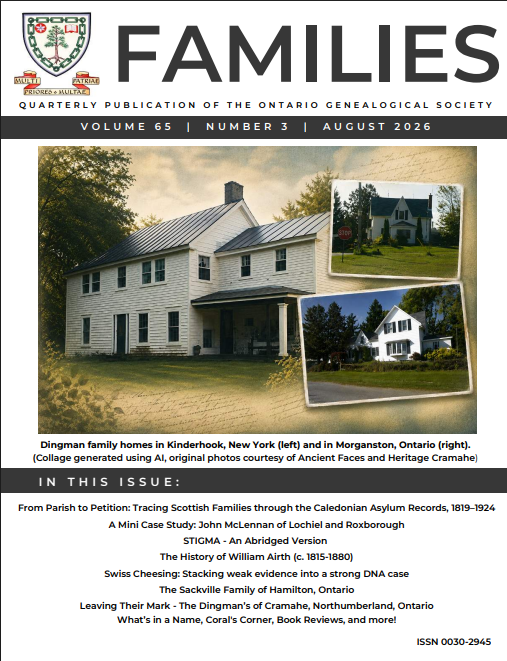 Volume 65, Number 3 of the OGS Quarterly publication is online for members. Contents are:
 Many record collections are too small and niche to attract the interest of the large genealogy companies, but none-the-less valuable. Often you’ll find them in the UK at local archives, county record offices and museums. It’s good practice to check those where you have ancestry periodically.
 MyHeritage has launched Y-DNA results that help users explore their direct paternal line based, in most cases, on existing MyHeritage DNA data, with no new test required.