

Go to www.findmypast.com using incognito mode. If interested, give it a try. Please post a comment on your experience.
Go to www.findmypast.com using incognito mode. If interested, give it a try. Please post a comment on your experience.
FamilySearch added 196 collection titles to “Records” in October..
The top 5 Countries by Number of Titles
United States: 24 titles
Guatemala: 24 titles
France: 15 titles
Brazil: 12 titles
Germany: 11 titles
The top 5 Countries by Net-New Number of Records
United States: ~131,000,000 net-new records (driven by massive federal census batches, U.S. residence histories, public records, and military draft/enlistment registers)
United Kingdom: ~5,000,000 net-new records (headlined by the major rollout of free name-indexed entries from the 1921 Census of England and Wales, plus wills and regional parish/electoral updates)
Brazil: ~1,000,000 net-new records (spanning civil registration and Catholic church records across multiple regions)
Philippines: ~2,100,000 net-new records (consisting of expanded civil registration and church records)
France: ~600,000 net-new records (comprising regional parish, civil registration, and historical census entries)
FamilySearch added 7 titles to its “Full Text” collection, the largest share being U.S. residence histories (spanning 1793 to 1964) with over 3.64 million records, alongside a massive nationwide biographical collection spanning centuries (2.25 million records) and a specialized local focus on Utah biographies (2.2 million records). Smaller targeted residence and directory collections were added for Puerto Rico, American Samoa, Guam, and Panama.
Miscellaneous items I found interesting this week.
National Folklore Collection UCD Digitization Project
Try searching this site for a place in your Irish family history. There are currently 786,170 manuscript pages, 14,076 photographs and 329 hours of audio in this collection that might add colour to your family story. I looked for Kilkeel and found an item about the Big Wind of 6 January 1839, maybe it blew my Great-Grandfather across to Liverpool!
Transforming the British Library
Here’s food for thought for genealogy societies experiencing a decline in membership numbers.
“Interim Chief Executive Jeremy Silver outlines our plans to modernise our spaces, improve access, and keep our world-class collections free for everyone.” “Institutions that endure are rarely those that refuse to change. More often, they are those that understand which parts of their heritage are sacred, and which must evolve.”
Find a Grave Index Updates
On 27 October Ancestry updated their Find A Grave Index collections for a range of locations, including Canada, and the UK & Ireland.
Nancy Rimmer RIP
Spouse of long-serving BIFHSGO treasurer Tom Rimmer, Nancy (Agnes), nee Blair, a native of Dunfirmline, Scotland, passed away last August at age 94.
FamilySearch Updates Canada, Prairie Provinces, Census, 1926
Census returns for Manitoba, Saskatchewan, and Alberta; now with 48,436 Images and 2,114,538 persons.
Addition to Internet Archive Canada LAC Collection
On 23 October the book “Recollections of Russia during thirty-three years’ residence“” was added to the IAC LAC collection. That was the sixth addition this year. ONLY THE SIXTH. Thousands have been promised.
Thanks to the following individuals for their comments and tips: Ann Burns, Anonymous, Gail, Glenn Wright, Helen Billing, Nancy Cutway, Teresa, Unknown.

Dorset Early Census Returns, 1724-1821
Dorset ancestors can be hard to find before the national census began in 1801, and this collection helps fill the gap. It includes the returns compiled by the Rev Dawnay in 1724, 1725 and 1769, drawn from M.B. Weinstock’s research in Old Dorset. Dawnay listed 156 houses with 605 inhabitants, recorded by sex and marital status. The collection also draws on Overseers of the Poor accounts, which record rent, allowances and help given in times of sickness, including one smallpox outbreak. Provided courtesy of Dorset FHS.
International War Memorial Photographs
This new collection brings together photographs of war memorials from well over a hundred countries and territories, from imposing national monuments to modest village plaques. The images are searchable by country and conflict, with coverage ranging from the English Civil War and Napoleonic Wars to both World Wars and more recent conflicts. For family and local historians, they offer a way to see where ancestors were remembered, including memorials in places you may never be able to visit.
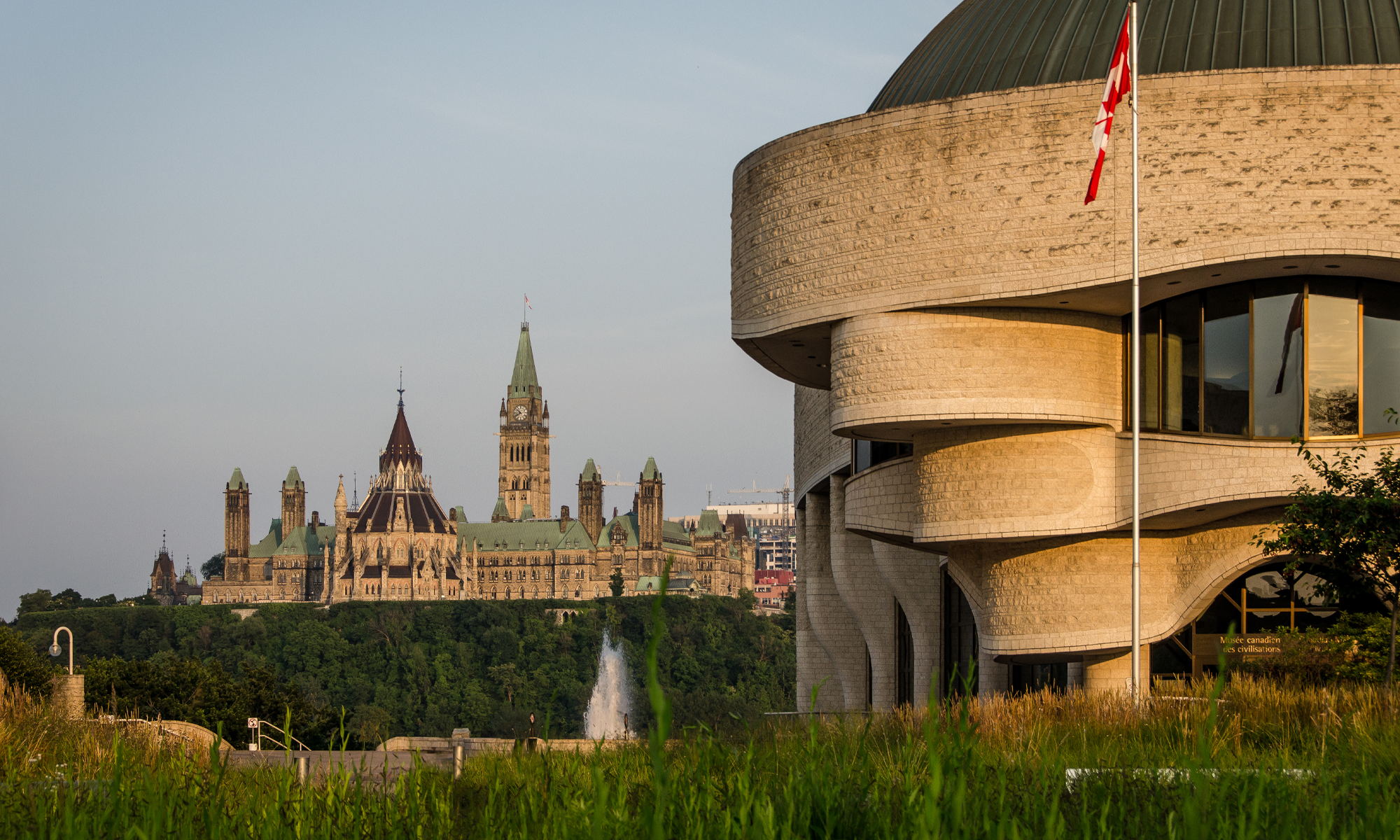
There are 381 entries for Canada, 17 of them for Ottawa.
Newspapers
This week’s update adds 274,462 pages across four new titles and updates to 32 existing publications.
New Titles
| Title | Date Range | Pages |
|---|---|---|
| The Two Worlds: A Journal Dedicated to Spiritualism, Occult Science &c. | 1887-1891 | 3,008 |
| Largs & Millport Weekly News | 1877-1890 | 1,828 |
| Conjuror’s Magazine | 1791-1793 | 892 |
| Theatrical and Musical Guide | 1884-1886 | 572 |
Updated Titles with Over 10,000 Pages Added
| Title | Date Range | Pages |
|---|---|---|
| Bristol Evening Post | 2001-2004 | 91,724 |
| Nottingham Evening Post | 2000 | 28,774 |
| South Wales Echo | 2005 | 22,408 |
| St Neots Town Crier | 2000-2004 | 19,310 |
| Times of Ceylon | 1917-1940 | 18,952 |
| Ceylon Observer | 1864-1891 | 13,854 |
| Wokingham Times | 2000-2004 | 11,732 |
| Capital (Calcutta) | 1919-1928 | 11,442 |
| Runcorn Weekly News | 2004-2005 | 10,866 |
Ancestry’s title Web: Ireland, Census, 1901 now has 4,441,893 records. This update fixes broken links and adds 11480 records. Original data is from Census of Ireland 1901/1911 at The National Archives of Ireland. http://www.census.nationalarchives.ie/search/
Ancestry’s UK, Wartime Records and Material, 1914-1918, 1939-1945 now has 30,182 records. It contains military and wartime images from The Imperial War Museums, the majority are photographs, but also includes illustrations, letters, newspapers, and other miscellaneous printed materials, such as military papers, leaflets, and posters.
BIFHSGO’s 2026 conference did something smart: three of its seven speakers were university professors. Professors teach for a living, so they tend to be both knowledgeable and comfortable in front of an audience.
How do you find them? Start with a university history department’s list of courses. Western University’s course offerings are a good example. Many of the courses are about topics family historians care about:
Each title hints at a possible talk. If your ancestor appeared in a Victorian court record, a talk on the justice system would help you understand what you found.
Each course has a description of how students may, and may not, use AI. There’s a considerable difference. Another course faces AI head-on. Digital Research Methods with Artificial Intelligence, covers using large language models and other computational techniques “to find and evaluate digital sources and use them for research purposes”. How timely.
Do you need speaker inspiration? Browse a nearby university’s course list and note any titles that match your society’s interests. Then send the professor a friendly email.
 New to MyHeritage on 26 October 2026, New York City Departing Passenger and Crew Lists, 1948-1956 has 5,551,717 records for ship and aircraft departures.
15,794 show birthplace as Canada, 46,042 as England, 17,681 as Scotland. 2,690 as Wales, and 38,152 as Ireland.
Unexpectedly, I found two departures for a relative who, temporarily, lived in Toronto.

The FreeBMD Database was updated on Friday, 23 October 2026 to contain 296,923,460 unique records, an increase from 296,707,946 in September.
Years with more than 10,000 additions are: 1994-95 and 1997 for births, 1995 and 19997 for marriages, and 1996-97 for deaths.
Choose from these selected free online events. All times are Eastern Time, unless otherwise noted. Registration may be required in advance – please check the links to avoid disappointment. For many more events, mainly in the U.S., visit https://conferencekeeper.org/virtual/.
Tuesday, 27 October
2:00 PM: Ottawa Virtual Genealogy Drop-In, by Ontario Ancestors (Ottawa Branch).https://ottawa.ogs.on.ca/events/
2:00 PM: Essential Photo Tools for Every Genealogist’s Toolbox: MyHeritage Edition, by Diane Henriks for MyHeritage and Legacy Family Tree Webinars.
https://familytreewebinars.com/upcoming-webinars/
2:30 PM: Getting Started with FamilySearch, for Allen County Public Library Genealogy Center.
https://acpl.libnet.info/event/17013231
7:00 PM: War Brides: New Lives in a New Land, by Melynda Jarratt for OGS Wellington County Branch.
https://wellington.ogs.on.ca/
6:30 PM: The Salem Witchcraft Trials of 1692: History and Sources, by John Beatty for Allen County Public Library Genealogy Center.
https://acpl.libnet.info/event/17012253
Friday, 30 October
2:00 PM: DNA in Action: Ruling Out Competing Hypotheses, by Karen Stanbary for Legacy Family Tree Webinars.
https://familytreewebinars.com/upcoming-webinars/
Saturday, 1 November
Every natural thing our forebears could not understand was ripe for superstition, and some of it we inherit. This follows our earlier post on birth and marriage superstitions.
Open the doors and windows and unlock all locks when a person is in their last extremity, so the departure of the soul is not hindered.
People will not die easily if anyone stands in front of them, or over them, in the last ten minutes.
“Wishing” or “crying back.” A dying person, it was said, cannot get their time over with ease if someone in the room will not give them up. Those who cannot bring themselves to part with a loved one were advised to withdraw, so that death might enter and claim his rights.
A good omen. Among Jewish communities, to die on one’s own birthday is considered a good omen.
Once a death had occurred, the front door was commonly opened and left ajar, night and day, until after the funeral. The belief was that the deceased’s spirit, having left the body, wandered round the dwelling and could not re-enter at will if every door and window were shut.
A related warning concerned the funeral procession itself. When a funeral leaves a house, the front door must not be shut until the mourners return, or it will soon be opened again for another corpse. Leaving the door open for several days was also said to prevent further deaths following.
If a member of the family died and the bees were not “put into mourning,” they would leave their hive. The hive might be draped in black crepe or cloth.
You will be sure of toothache if you eat while a funeral bell is tolling.
Two funerals on the same day lead to quarrels.
The Churchyard
It was thought unlucky to be the first person buried in a churchyard.
Which side to be buried on. The south and east sides of the churchyard were favoured for burial. Strangers, those who had suffered capital punishment and those who had taken their own lives were segregated to the north.
The watcher of the kirkyard. In Scottish and northern tradition, the spirit of the last person buried watches over the kirkyard until relieved by the next interment. This explains the belief that two funerals on one day lead to quarrels, since the spirit of the person last buried must keep watch over the place until the next burial releases it from its lonely vigil.
Sources for superstitions of all kinds from around the world include Biren Bonnerjea’s 1927 A Dictionary of Superstitions and Mythology, available on the Internet Archive, and Iona Opie and Moira Tatem’s 1989 A Dictionary of Superstitions.
On 23 October 1956, demonstrations began in Budapest, demanding political freedom and democratic reforms. On 4 November, the USSR launched a major military offensive, overwhelming Hungarian resistance. Of the more than 200,000 Hungarians who fled the country during the uprising, 37,566 reached Canada by the end of 1958. Among them were five of particular note:
Frank Hasenfratz (1935–2022), who founded major automotive-parts manufacturer Linamar in 1966.
Gábor Szilasi (1928–2026), documentary photographer, known for his photographs of rural Quebec.
Andrew Telegdi (1946–2017), MP.
Anna Porter (born 1944), founder of Key Porter Books.
George Jonas (1935–2016), columnist, poet and author.