AI Consensus Can Safeguard Genealogical Transcription

For family historians, a single misread word can be catastrophic. Faded parish registers and hurriedly scribbled 18th-century wills routinely conceal surnames, locations, and crucial dates beneath layers of age and haste. Misreading “Moor” as “Moon” is all it takes. The result is an incompatible branch grafted silently onto a family tree, and you may not catch it for years. Who hasn’t seen errors perpetuated in online trees?

AI models have made significant strides in transcription accuracy, yet still average a handful of errors per page. These mistakes are rarely wild inventions, more often plausible-looking errors that don’t raise alarms. That’s what makes them so dangerous.

Canadian historian Mark Humphries tackles this problem in his blog post, When Models Disagree…Transcription Accuracy Improves Significantly (subscribe to read). The approach is to pass a document through three distinct AI model families, such as Gemini, Claude, and GPT, then overlay the outputs. Where the models diverge, the system flags a potential error. Each model family has its own architectural blind spots, and disagreement between them is a reliable signal that something deserves a closer look. Cross-model consensus catches roughly three-quarters of all transcription errors. That pushes accuracy close to that of a skilled palaeographer and reduces manual review to only the most problematic passages.

Humphries outlines a fully automated process, but you don’t need that for a single knotty problem. There’s a simpler, poor man’s version. Feed the paragraph, or better yet, the full page to preserve context, through three or more AI models and compare what comes back. If that sounds tedious, hand the comparison itself to an AI. It takes minutes. The discrepancies it surfaces are where your attention should go.

The Early Perley

On Thursday, 28 May, the Ottawa Branch of the Ontario Genealogical Society will host an online presentation of interest to anyone researching Ottawa families, philanthropy, health institutions, or property on Wellington Street in the 19th and early 20th centuries.

In “The Perley family and the Perley Health facility,” Glenn Wright will outline the history of the Perley family, including their prominent Wellington Street mansion and its 1897 donation to a group seeking to establish a home for “incurables.” The talk follows the story through to 1920, when a new Perley Health building opened on Aylmer Avenue.

The online session begins at 7:00 p.m.

Registration: https://ottawa.ogs.on.ca/events/the-perley-family-and-the-perley-health-facility-ottawa/

Intellectual Freedom and Transparency at LAC

Library and Archives Canada has a new statement on intellectual freedom. It commits to making collections “available to all,” to not restricting access based on “a user’s intentions,” and to standing in “opposition to censorship.” Those are strong words. Earlier this year, I put them to a practical test.

In April, I filed an Access to Information request with LAC seeking “documentation on internal or collaborative projects finalized, in development, or under preliminary consideration intended to increase or update online access to LAC holdings for fiscal year 2026–27 and beyond.” In plain terms: what is LAC planning to digitize or make more accessible online, and when?

LAC’s response was a notice of extension: 450 days.

What the Access to Information Act actually allows

To be fair to LAC, the extension is entirely legal. The Access to Information Act permits institutions to extend the 30-day response deadline where a request involves a large volume of records or requires consultations that cannot reasonably be completed within the standard period. LAC is not, on its face, violating the law by invoking this provision.

But legal compliance and alignment with stated institutional values are different questions.

The alignment problem

LAC’s intellectual freedom statement is framed around access. Its own language commits the institution to “making our collections available to all” and “creating space for the exchange of ideas.” It explicitly states that LAC does not restrict access based on a user’s intentions.

The information I requested is not about the collections themselves. It concerns LAC’s own plans, its internal and collaborative roadmap for expanding public access. This is operational information about how a publicly funded institution intends to fulfil its mandate.

“An institution that opposes censorship might reasonably be held to a higher standard of openness about its own plans than the minimum the law requires.”

A 450-day extension on a request of this kind creates an obvious tension. If LAC has concrete plans to improve online access, those plans will be either substantially underway or shelved before any researcher, partner, or interested member of the public can learn what they were. The information, when it eventually arrives, may describe a past rather than inform a future.

The institutional transparency gap

LAC’s intellectual freedom statement is entirely outward-facing. It describes what LAC does for users regarding its holdings. It says nothing about transparency regarding LAC’s own decision-making, planning, or partnerships. That gap is not unusual for a government institution, but it is worth naming, precisely because LAC places intellectual freedom at the centre of its public identity.

Intellectual freedom, as a principle, is not limited to library collections. It includes the right to seek information about public institutions and their intentions. A 450-day response window on questions about publicly funded digitization plans does not obviously serve that principle, whatever its legal standing.

What’s fair to acknowledge

LAC manages an enormous volume of records and operates under real resource constraints. ATIP requests compete with ongoing operations, and large-scale searches through internal project documentation are genuinely time-consuming. The volume of responsive records is likely substantial.

LAC’s intellectual freedom statement acknowledges its legal obligations, including those under the Access to Information Act. Institutional transparency and collection access are treated, in that document, as related but distinct commitments.

The bottom line

Legally permissible extension?   Likely yes
Consistent with LAC’s stated values on access?   Partial, at best
Consistent with intellectual freedom as a principle?   In tension

Practically useful to researchers?   No

An institution that publicly champions intellectual freedom and access has implicitly accepted a higher standard than legal minimum compliance. A 450-day delay on a request about plans to improve public access is not censorship. But it is the kind of institutional opacity that intellectual freedom, properly understood, is meant to push back against.

I’ll report back when the records arrive. Likely sometime in 2027.

Transparency: A first draft of this post’s wording was generated by Claude Sonnet 4.6 based on my comprehensive prompts.
This Week’s Online Genealogy Events

Choose from these selected free online events. All times are Eastern Time, unless otherwise noted. Registration may be required in advance—please check the links to avoid disappointment. For many more events, mainly in the U.S., visit https://conferencekeeper.org/virtual/.

NOTE: The US NGS conference takes place from 27-30 May.

Tuesday, 26 May

02:00 PM: Ottawa Virtual Genealogy Drop-In, for OGS Ottawa Branch. https://us02web.zoom.us/j/86956419387

07:00 PM: Beyond the Basics: Exploring the Full Power of FamilySearch.org, by Manny Sanhueza for OGS Wellington County Branch. https://wellington.ogs.on.ca/events/wellington-county-branch-beyond-the-basics-exploring-the-full-power-of-familysearch-org/

Wednesday, 27 May

07:00 PM: ChatGPT for Genealogists, by Robert Cameron Weir for Niagara County Genealogical Society (US).
http://www.NiagaraGenealogy.org/blog/

Thursday, 28 May

07:00 PM: Beginnings: The Early History of Perley Health, 1890-1920, by Glenn Wright for OGS Ottawa Branch. https://us02web.zoom.us/meeting/register/Zn0F2PauTW-fd7ZfRVjLdw

Friday, 29 May
Saturday, 30 May

Discover Your Connection to Notable Individuals from History

In partnership with Illustrative DNA, MyHeritage has added a “Notable Individuals” feature to its Ancient Origins offering. This tool identifies the historical figures and groups most genetically similar to you based on data recovered from archaeological remains.

The report allows you to discover your genetic distance by comparing your DNA against 32 specific individuals and groups. It is a tool for exploring the broad components of your deep genetic makeup, rather than a proof of direct descent.

A closer look at the 32 reference points reveals they fit into three distinct categories:

  • Individual Historical Figures: Notable named people from history, such as the composer Ludwig van Beethoven, the architect George Bähr, the French revolutionary Jean-Paul Marat, and the Maryland colonial governor Philip Calvert.

  • Ancient and Archaeological Remains: Skeletal remains, mummies, or specific anonymous historical individuals known by their discovery sites or modern designations. This includes Ötzi (the Tyrolean iceman), Cheddar Man, Clovis Boy, the Birka Female Warrior, and the Hasanlu Lovers.

  • Aristocratic Families and Dynastic Lineages: Groupings or specific individuals explicitly tied to historical dynasties, such as the Aba Family, the Báthory Family, and specific rulers designated by their houses, like the Árpád Dynasty (King Béla III) and the Rurik Dynasty (Prince Gleb Svyatoslavich).

    My Results

It turns out my DNA is a closer match to Ludwig van Beethoven than to the 31 other options in the dataset. There is no indication in my family history of a relationship, although my grandfather was a professional musician.

In these reports, the Genetic Fit score reflects how well a combination of ancient populations aligns with your own genetics. A lower score indicates a closer match. My specific score with Beethoven is 2.803, which is classified as a “close” match. I also shared close matches with the Aba Family (2.869) and the Báthory Family (2.955).

Across all 32 reference points, my median score is 5.8795, placing the midpoint of my overall comparisons in the lowest tier of the “distant match” category.

The “Genetic Fit” score is calculated using Principal Component Analysis (PCA) to plot your DNA on a multi-dimensional grid (25 coordinates) against ancient samples, measuring the exact multi-dimensional geometric distance between your genetic coordinates and theirs.

File under fun.

FreeBMD May Update

The FreeBMD Database was updated on Friday, 22 May 2026, to contain 295,845,507 unique entries, up from 295,650,593 last month.

Years with more than 10,000 additions are: 1994-96 for births, 1995-96 for marriages, and 1996-97 for deaths.

O/T: A Super El Niño Coming?

You will have seen articles about a super El Niño forecast this year, such as this from the CBC. NOAA, the US Oceanic and Atmospheric Administration, is forecasting a greater-than-50 % probability of Strong or Very Strong El Niño conditions for the coming fall and winter.

What does it mean for the conditions where you live? Here, from NOAA via the CBC article, is a map of approximate wintertime El Niño weather patterns. Warmer-than-normal conditions prevail across the West and Prairies. Drier conditions, shown in purple, occur south of the Upper Great Lakes.

While warmer conditions might extend farther east if the El Niño is strong, it could manifest as more variable conditions, as warmer air clashes with cold Arctic air. Remember the 1998 Ice Storm, which was followed by cold temperatures, making it truly miserable for those who lost power for days. That was during a strong El Niño event.

If your ancestors were around in 1887-88 they would have lived through North America’s “Year Without a Winter.” Characterized as a “black winter” due to the complete lack of snow cover across Manitoba and parts of Ontario, December 1877 brought overflowing rain barrels and muddy roads instead of snowbanks. In Winnipeg, the monthly mean temperature was more than 23°F (about 13°C) warmer than the average of the preceding five years. In the Ottawa Valley, the lack of snow hindered logging operations and travel on what would normally be snow-packed roads.

Sunday Sundries

Miscellaneous items I found interesting this week.

Recollecting a visit to Athens

Quality of Life in Canada.
A study published by StatsCan shows increases in life satisfaction, sense of meaning and purpose, and future outlook from Q2 2024 to 2025. Seniors 65+ show the highest life satisfaction.

People Are Getting Ahead With ChatGPT and Perplexity. Here’s How.

OGS Toronto Branch May Meeting
Online at 7 pm on Monday evening, Seafaring Ancestors, and The Glorious Life of a Genealogist when a new census arrives.

Thanks to the following individuals for their comments and tips:  Anonymous, Gail, Julia, Teresa, and Unknown.

Findmypast Weekly Update

Ireland Census 1926

This census is now also accessible through Findmypast, which has added 2,972,363 records to its platform. It provides an alternative access for researchers cross-referencing Irish family history. The National Archives of Ireland reports public interest remains high, with more than 3 million views since the initial launch on 18 April 2026.

The NAI has been updating its 1926 Census database to improve accuracy in response to internal reviews and public feedback. The latest release includes:

  • Corrections from internal quality checks and public transcription submissions.

  • Redactions for individuals aged over 100 who requested privacy.

  • Corrected map links for institutions.

  • The addition of approximately 1,400 previously missing individuals.

Updates are being released regularly.

Newspapers

371,400 pages joined the British Newspaper Archive, accessible through FMP, this week, with six new titles and 36 updated publications from across the British Isles.

New Titles

Title Date Range Pages
Wimbledon Herald 1901–1921 6,878
Phono Trader and Recorder 1904–1913 6,688
Leicester Pioneer 1905–1921 6,678
Irish Templar 1877–1896 4,100
Knaresborough Times 1864–1889 1,050
Bennett’s Register of Penny Advertisements 1892–1893 288

Updated Titles with Over 10,000 Pages Added

Title Date Range Pages
Lancashire Evening Post 1994–2004 139,180
Huddersfield Daily Examiner 2001–2003 31,510
Birkenhead News 2000–2005 31,118
Burton Daily Mail 2002–2003 25,554
Pall Mall Gazette 1903–1911 13,756
Pateley Bridge & Nidderdale Herald 1878–2005 12,780
Derby Daily Telegraph 1983 10,762

Michael Gandy RIP

Michael Gandy, past Chair and Fellow of the Society of Genealogists, passed on 16 May 2026 at the age of 76. Widely respected, Michael served as editor of The Genealogists’ Magazine from 2000. His publications show his particular interest in Catholic ancestry.

1995 — Latin for Family Historians.
1996 — Catholic Family History: A Bibliography.
1998 — Tracing your Catholic ancestry in England.
2000 — Tracing Nonconformist Ancestors.
2001 — Tracing Your Catholic Ancestors.
2007 — Family History: Cultures and Faiths: How Your Ancestors Lived and Worshipped.

What’s in WDYTYA Magazine: June 2026

Think you need to be a tech wizard to use AI for family history research? Think again.
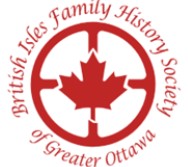
In the lead article, Break Down Your Brick Walls Using AI, James Ransom shows exactly where AI can help solve genealogical puzzles — and, just as importantly, how far to trust it and how to avoid common pitfalls.

Also in this issue, Loren Potts profiles Zoe Ball, Amy Dowden, and Joe Swash, the three subjects featured in the new BBC series of Who Do You Think You Are? — a great introduction if you’re unfamiliar with, and at all interested in, these British personalities.

The third feature, Miniature Marvels, sees Nicola Lisle trace how dolls’ houses evolved from aristocratic status symbols to beloved children’s toys.

Elsewhere in the issue, Julie Kathleen Johnson’s Settlement and Removal Records explains how to use these essential Poor Law documents to research ancestors who fell on hard times, while Anthony Adolph offers expert guidance on tracing aristocratic ancestors using Burke’s Peerage.

BIFHSGO Exchange Journals

Did you know that  BIFHSGO members can find the latest editions of journals from Family History Societies mentioned below in the section of the Member’s Area?

Berkshire Family History Society (Berkshire Family Historian)
Family History ACT (FHACT) (formerly the Heraldry & Genealogy Society of Canberra)
Isle of Wight Family History Society Journals
Shropshire Family History Society
Society of Genealogists
Suffolk Family History Society (Suffolk Roots)
Waltham Forest Family History Society (Roots in the Forest)